
Publications
Books, articles, and chapters.
Both monographs are open access. Links lead to the publisher’s version wherever one exists.
01Academic and public
Books
Public scholarship
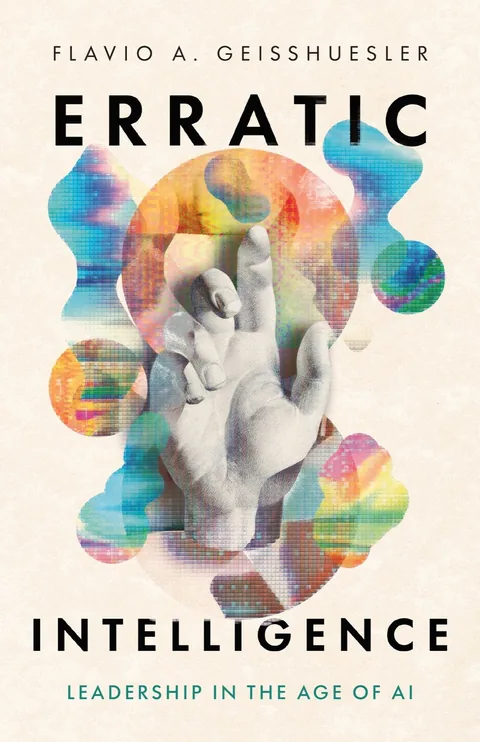
Erratic Intelligence: Leadership in the Age of AI. Errāticus Press, 2026. The first volume of the Technopsychology Trilogy. Book details and ordering (opens in a new tab)
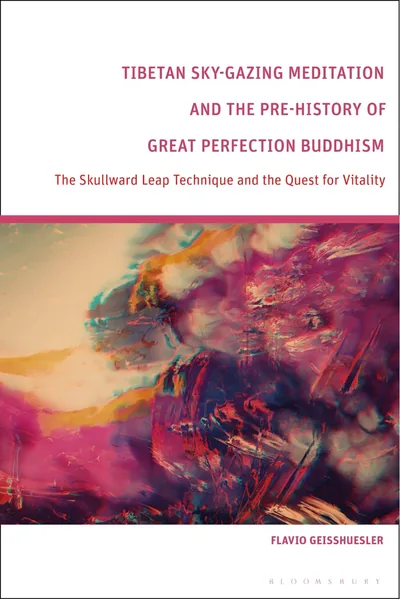
Tibetan Sky-Gazing Meditation and the Pre-History of Great Perfection Buddhism: The Skullward Leap Technique and the Quest for Vitality. Bloomsbury Academic, 2024. Open access. https://doi.org/10.5040/9781350428843 (opens in a new tab)

The Life and Work of Ernesto de Martino: Italian Perspectives on Apocalypse and Rebirth in the Modern Study of Religion. Numen Book Series 173. Brill, 2021. Open access. https://doi.org/10.1163/9789004457720 (opens in a new tab)
Praise for Erratic Intelligence
“Erratic Intelligence offers penetrating insight into where we are and what happens next if we continue to embrace efficiency as our goal.”
“Before you read anything else about AI, read this. It may change your life.”
“For all the dilemmas and uncertainty ahead, he gives us a path forward and a reason to believe in something better.”
02Journals
Articles
- “Crisis, Culture, and Creation: Ernesto de Martino’s Ethos of Transcendence Beyond Cassirer and Heidegger.” CoSMo 26 (2025): 117–134. Open access. https://doi.org/10.13135/2281-6658/12176 (opens in a new tab)
- “Meditation Between Open Skies and Deep Ravines: Revisiting the Ethos of Freedom in Great Perfection (Dzogchen) Buddhism.” Journal of the International Association of Buddhist Studies 45 (2022): 39–71. View at Peeters (opens in a new tab)
- “From Grounded Identity to Receptive Creativity: The Mythical-Historical Formation of the Nyingma School and the Potential of Collective Trauma.” International Journal of Buddhist Thought and Culture 30 (2020): 233–269. https://doi.org/10.16893/IJBTC.2020.06.30.1.233 (opens in a new tab)
- “Luminous Bodies, Playful Children, and Abusive Grandmothers: Trauma, Dissociation, and Disorganized Attachment in the Early History of Great Perfection (rDzogs chen) Buddhism.” Religions 11, no. 3 (2020): 114. Open access. https://doi.org/10.3390/rel11030114 (opens in a new tab)
- “When Buddhas Dissociate: A Psychological Perspective on the Origins of Great Perfection Buddhism (rDzogs chen).” Cogent Psychology 6, no. 1 (2019): 1707055. Open access. https://doi.org/10.1080/23311908.2019.1707055 (opens in a new tab)
- “The 7E Model of the Human Mind: Articulating a Plastic Self for the Cognitive Science of Religion.” Journal of Cognition and Culture 19 (2019): 450–476. https://doi.org/10.1163/15685373-12340069 (opens in a new tab)
- “A Parapsychologist, an Anthropologist, and a Vitalist Walk into a Laboratory: Ernesto de Martino, Mircea Eliade, and a Forgotten Chapter in the Disciplinary History of Religious Studies.” Religions 10, no. 5 (2019): 304. Open access. https://doi.org/10.3390/rel10050304 (opens in a new tab)
03Edited volumes
Book chapters
- “Direct Transcendence: A Cognitive Perspective on Meditation as an Intentional Transformative Experience.” In Intentional Transformative Experiences, 47–70. De Gruyter, 2024. Open access. https://doi.org/10.1515/9783110909883-003 (opens in a new tab)
- “Framing the Sky of Skullward Leap: Meditation as a Contemplative System.” In Traditions, Translations and Transitions in the Cultural History of Tibet, the Himalayas and Mongolia, 143–160. ISMEO, 2024.
- “From Bardo to Brain: Tibetan Contemplation Meets Predictive Processing.” In Contemplative Studies in Tibetan Context, edited by Michael Sheehy and Marc-Henri Deroche. Brill, in press.
04Beyond the university
Public scholarship
- “Teaching with AI: Revolutionising Education While Honouring Tradition.” Teaching@Sydney, University of Sydney, 2024. Read the essay (opens in a new tab)
05Reviews
Review
- Review of Philippe Bornet, Rites et pratiques de l’hospitalité (2010). Journal of Indo-Judaic Studies (2016).
ProfilesORCID (opens in a new tab)University of Sydney profile (opens in a new tab)