Religionshistoriker University of Sydney

Wie religiöse Traditionen prägen, wie Menschen Krisen begegnen.

Ich bin Flavio A. Geisshuesler, Khyentse Macready Senior Lecturer in Tibetan Buddhism an der School of Languages and Cultures der University of Sydney. Ich erforsche die Meditation im indo-tibetischen Buddhismus und die Geschichte der Religionswissenschaft und habe diese Arbeit auf eine Frage gerichtet, die unsere Zeit mit neuer Dringlichkeit stellt: was uns die lange Geschichte der Religion über das Leben mit künstlicher Intelligenz sagen kann. Dieser Frage gehe ich in Forschung und Lehre nach, ebenso in Büchern und Vorträgen für ein Publikum über die Universität hinaus.

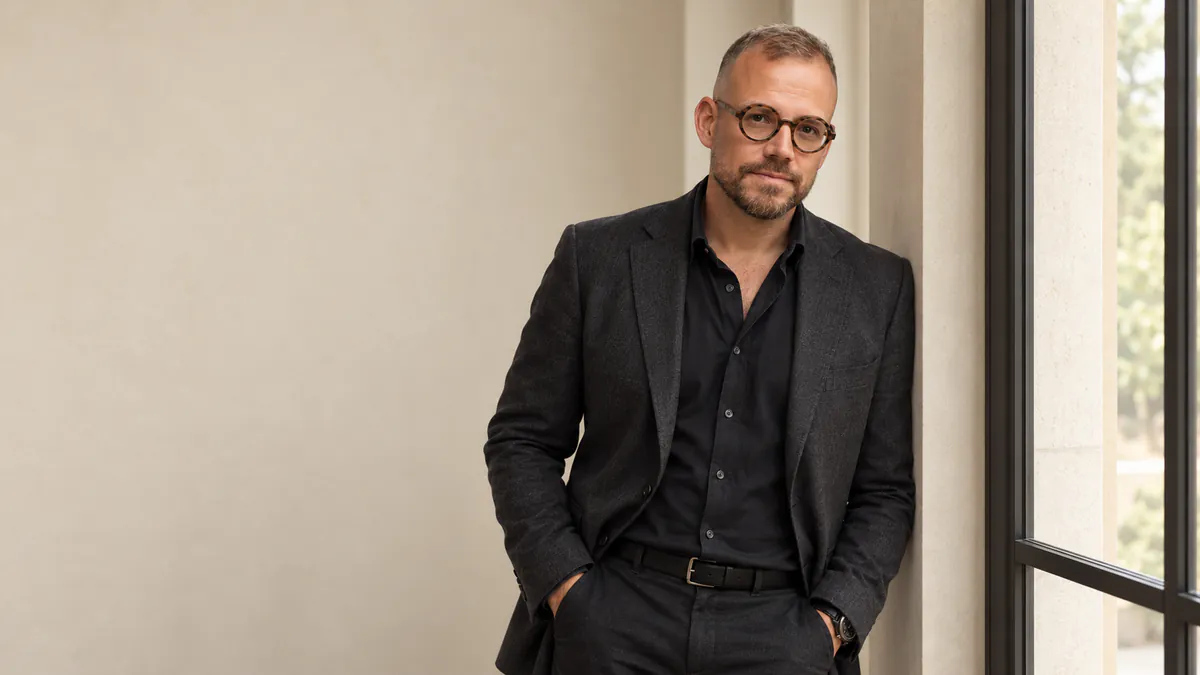
Flavio A. Geisshuesler in dunklem Jackett, neben einem sonnenbeschienenen Fenster stehend.

Flavio bei ABC Radio National

KI, Erlösung und die Geschichten, die wir über die Zukunft erzählen.

Flavio sprach mit James Carleton und Michael Muthukrishna in God Forbid über KI und religiöse Vorstellungswelten: die Überzeugungen, Versprechen und Ängste, die unsere technologische Zukunft prägen.

The AI Apocalypse: Human salvation or human extinction?

God Forbid · ABC Radio National · · 54:36

01Forschung

Zwei Stränge aktueller Forschung.

Beide entspringen derselben Frage: wie Menschen auf religiöse und kontemplative Ressourcen zurückgreifen, wenn die Welt, auf die sie sich verlassen, in Bewegung gerät.

Monografie in Vorbereitung

Beyond Calm

Meditation as a Cultural Technology of Crisis, Vision, and Agency

Die Gegenwartskultur versteht Meditation meist als Technik der Beruhigung. Dieses Buch argumentiert, dass buddhistische Meditation etwas Grösseres ist: eine aktive, weltzugewandte Tradition, mit der Gemeinschaften Krisen begegneten, Visionen kultivierten und in der Welt handelten.

Zum Projekt

Aktuelles Projekt

Religious Grammars of Artificial Intelligence

Authority, Mediation, and the Human

Die öffentliche Debatte über KI schwankt zwischen Heilsversprechen und Untergangswarnungen. Dieses Projekt liest beides als eine einzige apokalyptische Erzählung und verfolgt die älteren religiösen Grammatiken, die in ihr wirken, von Schöpfung und Offenbarung bis zum Gericht und zur Frage nach nichtmenschlichen Personen.

Zum Projekt

02Publikationen

Bücher

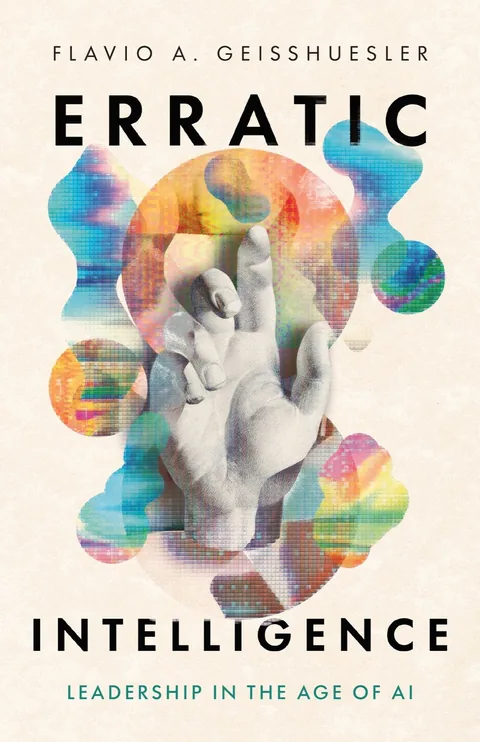
Cover von Erratic Intelligence: Leadership in the Age of AI

Wissenschaft für ein breites Publikum

Errāticus Press, 2026

Erratic Intelligence: Leadership in the Age of AI

Der erste Band der Technopsychology Trilogy, für ein Publikum über die Universität hinaus geschrieben, handelt davon, was Führungskräfte weiterhin selbst beurteilen müssen, wenn Maschinen überzeugende Antworten liefern.

Informationen zum Buch (öffnet in einem neuen Tab)
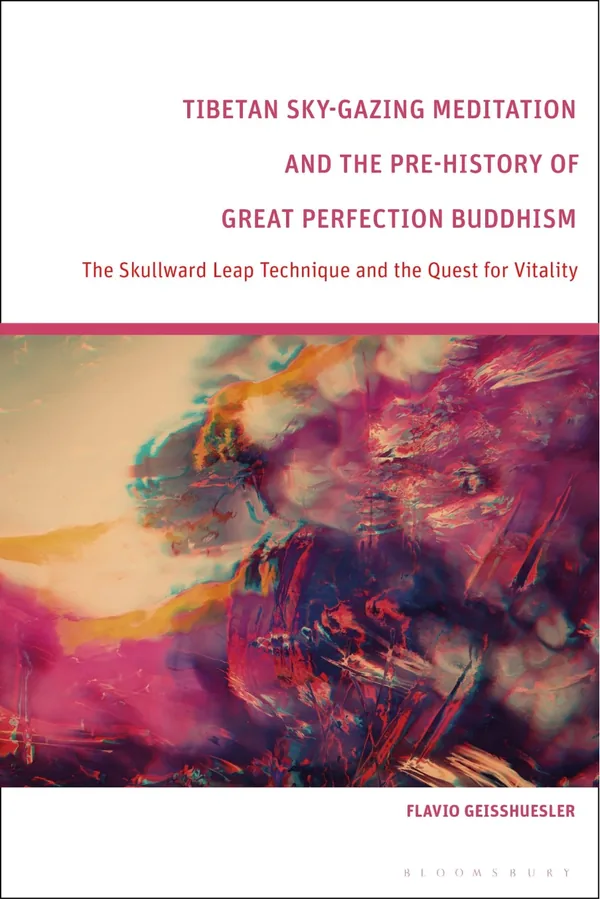
Cover von Tibetan Sky-Gazing Meditation and the Pre-History of Great Perfection Buddhism

Bloomsbury Academic, 2024 Open Access

Tibetan Sky-Gazing Meditation and the Pre-History of Great Perfection Buddhism

Eine Studie über den Skullward Leap, eine Technik der Himmelsschau in der Grossen Vollkommenheit, mit der These, dass die Praxis Spuren einer älteren tibetischen Welt von Himmel und Lebenskraft bewahrt, die über Jahrhunderte innerhalb des Buddhismus umgeformt wurde.

Kostenlos lesen (öffnet in einem neuen Tab)
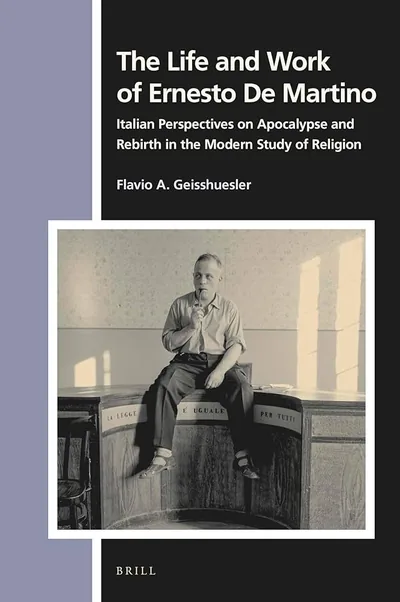
Cover von The Life and Work of Ernesto de Martino

Brill, Numen Book Series, 2021 Open Access

The Life and Work of Ernesto de Martino

Eine Studie über den italienischen Religionshistoriker und sein Denken über Krise, Apokalypse und Wiedergeburt.

Kostenlos lesen (öffnet in einem neuen Tab)

Alle Publikationen

Stimmen zu Erratic Intelligence

“Erratic Intelligence offers penetrating insight into where we are and what happens next if we continue to embrace efficiency as our goal.”

Amy C. Edmondson, Novartis Professor of Leadership and Management, Harvard Business School, and author of Right Kind of Wrong

“Before you read anything else about AI, read this. It may change your life.”

Barry Schwartz, Research Associate, Haas School of Business, UC Berkeley, and co-author of Practical Wisdom and Choose Wisely

“For all the dilemmas and uncertainty ahead, he gives us a path forward and a reason to believe in something better.”

Brad Harris, Professor of Management and Associate Dean, MBA/EMBA Programs, HEC Paris

03Vorträge

Vorträge und Gespräche.

Transkript lesen (Englisch)

My heart is pumping, and I’m quite nervous. My mind is jumping around like a monkey from one branch to the next on a tree. Zipper, meditation, presentation, cappuccino, pizza. Always go to the pizza at the end. This is my mind.

I am trained as a historian of Indo-Tibetan religions, which means that I study very old texts that are written in Sanskrit and in Tibetan languages. And meditation has become one of our main means in our society to deal with stress. How meditation, or mindfulness meditation, works is by focusing one’s attention on an object, such as the natural flow of our breath. In a way, what meditation does is it disattends to these discursive thoughts that keep running through our minds, and it disrupts this identification with the monkey mind. We slow down, we get present-centered, and the monkey, in a way, relaxes. And so we can do this together right now, just for one second maybe. All of us just close our eyes, take a deep breath, and just feel our bodies in this very moment.

Now, this kind of felt good to me. I’m here to introduce a new paradigm of meditation research. These practices are usually marked by a very open, spacious, and kind of unstructured approach to reality. Here, we find meditators, like here, sitting on top of mountains, on the slopes of mountains, and they gaze into the blue skies for extended periods of time. And what happens is that as they do this, they start to perceive certain things. Visions start to come up quite naturally and automatically. And so I call these practices participant-spontaneous forms of meditation, because it’s as if by looking at reality in an unstructured way, reality itself grips us, or it manifests to us in an automatic way, and we start to appreciate things that we haven’t seen before.

This, too, can be done right now, right here. I mean, all of us can just let our gazes kind of fly across the panorama of this room, and you’ll see stuff you haven’t seen before. In a way, I believe that these types of techniques and this endless possibility and potential for vision is deeply connected to our passions. Passions, too, cannot be created. We’re usually gripped by our interests. And so in a way, me standing here today is the result of me following my monkey mind and becoming a speaker in front of you, sharing my knowledge with you guys.

I come to the second set of techniques. They usually consist out of two stages. In a first stage, the meditators visualize themselves and they identify with a deity. They do this over and over again, taking on the various characteristics of the god, like here, for example, in this mandala. And then in a second stage, they take on this identity, they embody it, and they act it out, and they perform various physical practices. And so these techniques I define as predictive-executive forms of meditation, because here we’re no longer participating in this kind of natural unfolding of reality, but much rather we’re setting ourselves up to take on a specific identity, we apply it, and then we test it in reality.

And so in a way, this too can be related to my experience standing in front of you right now. I remember when I first started out lecturing, I had a course of 140 students at the University of Virginia before I even finished a PhD, and I was so nervous that I kind of crafted myself this Flavio lecturer personality, and I was like, “Fact one, fact two, fact three.” It was like a reading, or a speaking Wikipedia entry. There was hardly any presence in that, the poor students. But it was over time, as I was practicing and repeating and kind of getting comfortable with this persona that I’ve crafted, that I was able to integrate form and freedom, structure and spontaneity, this public persona and the more intimate sense of self, which I hope is flowing through this talk today.

Become the Monkey! A New Paradigm for Meditation Research

Forschungsvortrag, Azrieli Fellows Program, 2022. Über die experimentelle und disruptive Seite der Meditation und was sie für die Meditationsforschung bedeutet.

Den ganzen Vortrag ansehen (21 Min.) auf YouTube (öffnet in einem neuen Tab)
Transkript lesen (Englisch)

So you can say, “Hey, this is horrible. We need to stop this. I will never, ever use AI. I’m throwing away my phone.” As soon as you turn on your phone, you’re using AI, right? People underestimate the pervasiveness of this technology.

But the point is, you have people who say, “Let’s return to the human”: restore presence, authorship, embodiment, slow reading, ethical judgment. I mean, this is my world, right? I am the humanities guy. I have two PhDs in the humanities. If you go on LinkedIn today, you have a lot of people that say, “Ah, the humanities, they will save us,” right?

But the secret is, and nobody talks about this, and nobody wants to talk about this, because the only thing that they’re not critical of is, in a way, their own thinking: the humanities, with the anti-foundationalist turn since the ’50s, ’60s, what is the French theory in France, has destroyed any sort of clear human value. Any sort of humanistic anchor that might have been there has been destroyed. And in many ways, if you read Barthes or Foucault, or you read Derrida, and it starts with Saussure, if you read these people, you can see how AI is having a field day with it. It is a dream.

If reality is completely detached from the text, and the text is just floating on top, and it’s authorless in a way, what is AI doing? It’s like, “Oh yeah, this is my world. Let’s go.” Right? This is a collaboration. Nobody’s talking about it, but the humanities are very much involved in this process, and they are not the solution to this problem. Believe me.

On screen, the film names the steps of the argument: the limits of refusal; the promise of a “return to the human”; a critique from within; the humanistic anchor; the intellectual lineage of Roland Barthes, Michel Foucault, Jacques Derrida and Ferdinand de Saussure; text without an author; and the consequence: the humanities are involved in the process they seek to resist.

Can the humanities save us from AI?

Minds and Intelligences Research Centre, Macquarie University, Mai 2026 1 Min. 26 s

04University of Sydney

Lehre

Ich unterrichte klassisches Tibetisch, Sanskrit sowie die Geschichte des buddhistischen Denkens und der buddhistischen Praxis, stets ausgehend von den Quellen. Seit meiner Ankunft in Sydney im Jahr 2024 habe ich drei neue Lehrveranstaltungen konzipiert, und ich heisse Doktorierende in Tibetologie und Buddhismuskunde, in Religionsgeschichte sowie im Bereich Religion und Technologie willkommen.

Lehre und Betreuung

05Repertoire

Jede Sprache verändert die Frage.

Ich habe mehr als ein Dutzend moderne und klassische Sprachen gelernt und setze sie auf unterschiedliche Weise in Forschung, Lehre und Alltag ein. Der Wechsel zwischen ihnen hat mich gelehrt zu fragen, ob eine vertraute Idee (Geist, Freiheit, Autorität) in einem anderen Umfeld dasselbe bedeutet.

Das folgende Repertoire unterscheidet zwischen fliessendem Sprachgebrauch, genauer Lektüre für die Forschung und Sprachen, die ich noch lerne.

Flavio A. Geisshuesler sitzt in einem weissen Leinenhemd da, ein aufgeschlagenes Buch in den Händen.

23 Sprachen, 17 moderne und 6 klassische. Beim Überfahren mit der Maus oder beim Antippen zeigt jede Sprache ihren deutschen Namen, mein Niveau und ob sie modern oder klassisch ist.

In sechs dieser Sprachen lebe ich. Die übrigen sind Arbeitssprachen, die Türen offen halten: zu Menschen, Orten und Archiven.

06Über die Universität hinaus

Was macht all diese Intelligenz mit uns?

Eine schnellere Antwort ist nützlich. Sie klärt nicht, was wir tun sollen oder was wir weiterhin lernen müssen. Wie verändern wir uns selbst, während wir unsere Werkzeuge verändern? Diese Frage hat den Seminarraum verlassen, und ich trage sie auf dreierlei Weise über die Universität hinaus.

Film 2:56 Ein animiertes Porträt

Two worlds, one question.

Ein kurzes animiertes Porträt: von der Erforschung buddhistischer Meditation zur Business School und zur Frage, vor der heute beide Welten stehen. 2 Min. 56 s.

Transkript lesen (Englisch)

Meet Flavio Geisshuesler, a university professor and a global authority on the study of Buddhist meditations across India, Tibet, and the Himalayas. With dual PhDs in the history of religions, Flavio’s expertise spans teaching on four continents, highlighting a profound understanding of psychophysical practices that invigorate, engage, and connect.

Unlike the solitary and passive methods often found in the West, Flavio’s focus is on meditation as a dynamic interplay of aesthetics, vigor, and social integration. A dedicated practitioner and certified teacher, he has studied with revered yogis and masters worldwide.

Flavio’s academic journey transcends traditional boundaries, integrating philosophy, linguistics, cognitive sciences, neuroscience, and artificial intelligence. This interdisciplinary blend empowers him to draw surprising parallels and forge connections across various knowledge domains.

As a prolific author and speaker, Flavio champions meditation as a transformative “technology of change,” designed to help individuals balance the paradox between stability and growth, enhancing personal and professional development.

Then he did something unusual for a scholar of his standing. He went to business school. An Executive MBA from HEC Paris. Coaching training at INSEAD. Executive education at the London School of Economics. A second language for his work: the language of organizations, decisions, and change.

Today he works in both worlds at once. Because both, he argues, now face the same question. AI is built to predict. And anything predictable can now be produced faster, cheaper, and without us.

What remains ours when intelligence is everywhere? Not output. Not information. What remains is deeper: attention, judgment, experience, responsibility, and the courage to depart from the pattern. None of it can be installed. It has to be formed, in people, over time.

And how human beings are formed is the question Flavio has studied his entire career. Erratic Intelligence, the first book in his Technopsychology Trilogy, is a field guide to the capacities that become more valuable, not less, as machines improve.

He takes the argument into boardrooms, universities, and leadership teams. On four continents. In four languages. Because AI can produce the answer. It cannot produce the person who can answer for it.

Invite Flavio to speak.

On screen: an animated portrait in line drawings, with key words as captions: the three business-school credentials (Executive MBA, HEC Paris; Executive Coaching Certificate, INSEAD; Executive education, London School of Economics), the four languages (English, German, French, Italian) and the cover of Erratic Intelligence. At the end: Invite Flavio to speak, flaviogeisshuesler.com.

Herunterladen (1080p) MP4, 23 MB

Die Trilogie

Erratic Intelligence: Leadership in the Age of AI eröffnet die Technopsychology Trilogy, die fragt, wie Technologie die Menschen prägt, die sie nutzen, und wie wir diese Beziehung bewusst gestalten können. Der erste Band plädiert für die Fähigkeit, eine vertraute Richtung zu hinterfragen, eine andere zu wagen und für die Entscheidung einzustehen.

Das Buch (öffnet in einem neuen Tab)

Vorträge

Ich spreche an Universitäten, Konferenzen und Treffen von Führungskräften über KI und darüber, was die Religionsgeschichte über sie weiss: von meiner Keynote The Straight Line Is Free bis zu einem Vortrag darüber, warum unsere Geschichten über KI so apokalyptisch klingen.

Vorträge

Diese unabhängige Arbeit ist von meiner Tätigkeit an der Universität getrennt.

07Kontakt

Schreiben Sie mir.

Für Forschungskooperationen, die Betreuung von Doktorierenden und wissenschaftliche Vorträge schreiben Sie bitte an flavio.geisshuesler@sydney.edu.au. Für Vortragsanfragen und andere Einladungen schreiben Sie an contact@flaviogeisshuesler.com.