Historien des religions Université de Sydney

Comment les traditions religieuses façonnent la manière dont les êtres humains affrontent la crise.

Je suis Flavio A. Geisshuesler, Khyentse Macready Senior Lecturer in Tibetan Buddhism à la School of Languages and Cultures de l’Université de Sydney. J’étudie la méditation dans le bouddhisme indo-tibétain et l’histoire des sciences des religions, et j’ai orienté ce travail vers une question que notre époque pose avec une urgence nouvelle : ce que la longue histoire des religions peut nous apprendre sur la vie avec l’intelligence artificielle. Je la poursuis dans la recherche et l’enseignement, ainsi que dans des livres et des conférences destinés à des publics au-delà de l’université.

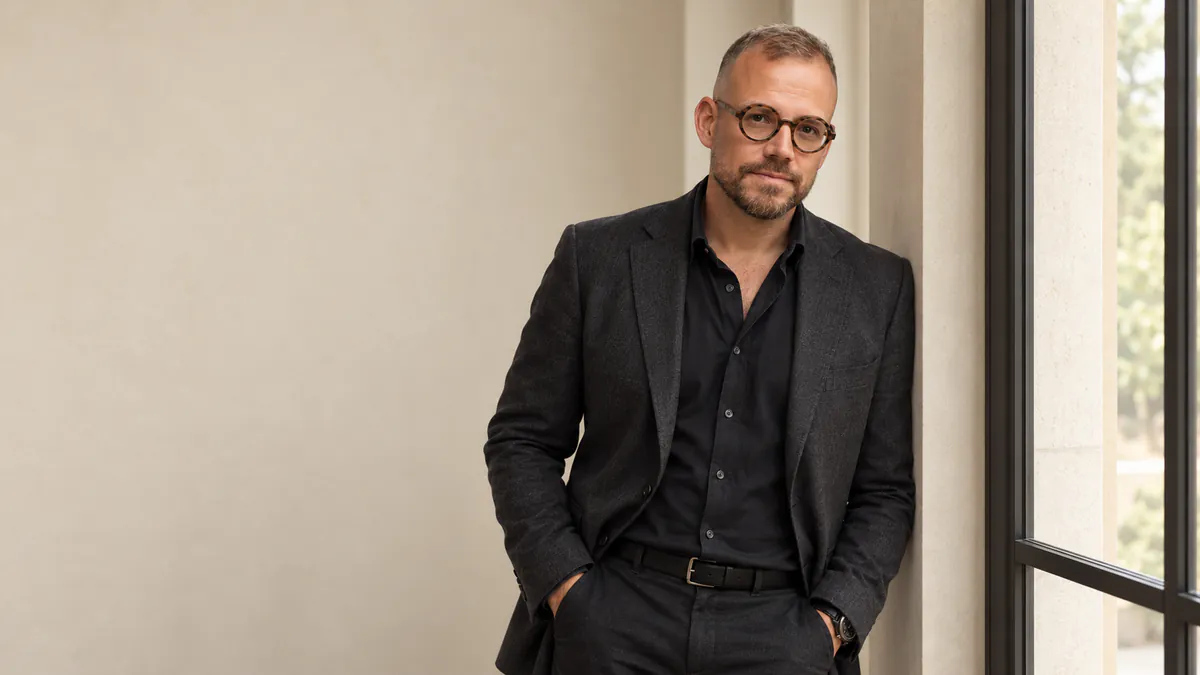
Flavio A. Geisshuesler en veste sombre, debout près d’une fenêtre ensoleillée.

Flavio sur ABC Radio National

IA, salut et récits sur notre avenir.

Flavio a rejoint James Carleton et Michael Muthukrishna dans God Forbid pour parler de l’IA et de l’imaginaire religieux : les croyances, promesses et peurs qui façonnent notre avenir technologique.

The AI Apocalypse: Human salvation or human extinction?

God Forbid · ABC Radio National · · 54:36

01Recherche

Deux axes de recherche en cours.

Tous deux naissent de la même question : comment les êtres humains puisent dans des ressources religieuses et contemplatives lorsque le monde sur lequel ils comptent commence à se dérober.

Monographie en préparation

Beyond Calm

Meditation as a Cultural Technology of Crisis, Vision, and Agency

La culture contemporaine traite surtout la méditation comme une technique pour trouver le calme. Ce livre soutient que la méditation bouddhique est bien davantage : une tradition active, engagée dans le monde, à travers laquelle des communautés ont affronté la crise, cultivé une vision et agi dans le monde.

À propos du projet

Projet en cours

Religious Grammars of Artificial Intelligence

Authority, Mediation, and the Human

Le débat public sur l’IA oscille entre promesses de salut et annonces de catastrophe. Ce projet lit les deux comme un seul et même récit apocalyptique et retrace les grammaires religieuses plus anciennes qui y sont à l’œuvre, de la création et de la révélation jusqu’au jugement et à la question des personnes non humaines.

À propos du projet

02Publications

Livres

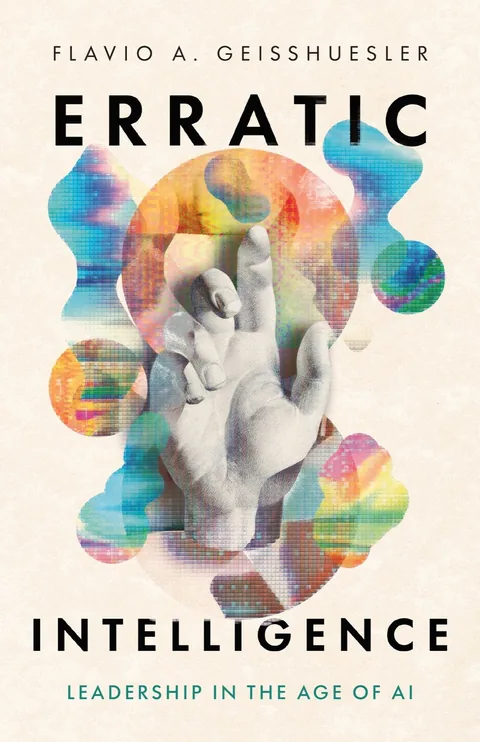
Couverture d’Erratic Intelligence: Leadership in the Age of AI

Savoir pour le grand public

Errāticus Press, 2026

Erratic Intelligence: Leadership in the Age of AI

Premier volume de la Technopsychology Trilogy, écrit pour des lecteurs au-delà de l’université, sur ce que les dirigeants doivent encore juger par eux-mêmes lorsque les machines produisent des réponses convaincantes.

Présentation du livre (s’ouvre dans un nouvel onglet)
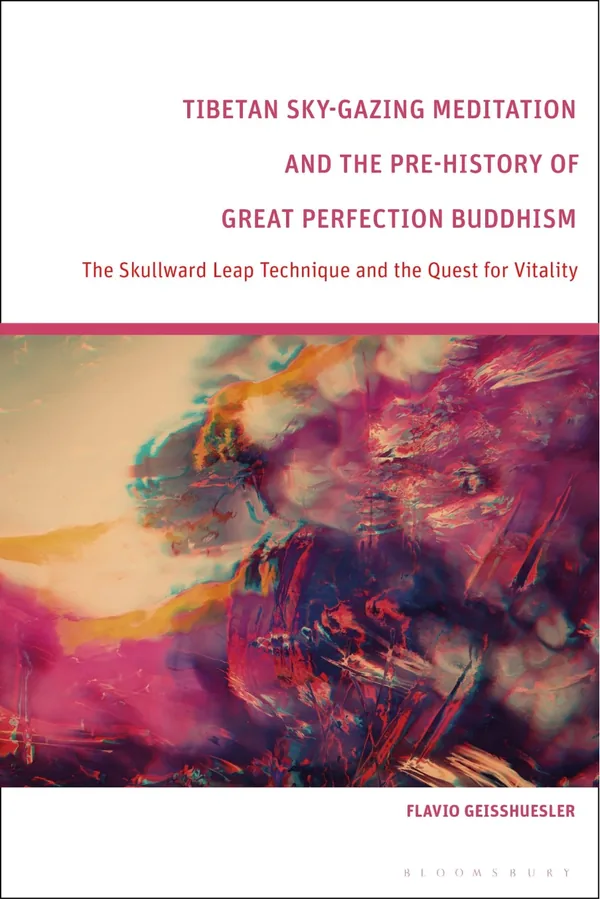
Couverture de Tibetan Sky-Gazing Meditation and the Pre-History of Great Perfection Buddhism

Bloomsbury Academic, 2024 En libre accès

Tibetan Sky-Gazing Meditation and the Pre-History of Great Perfection Buddhism

Une étude du Skullward Leap, une technique de contemplation du ciel propre à la Grande Perfection, qui soutient que cette pratique conserve les traces d’un monde tibétain plus ancien, fait de ciel et de vitalité, remanié au fil des siècles au sein du bouddhisme.

Lire gratuitement (s’ouvre dans un nouvel onglet)
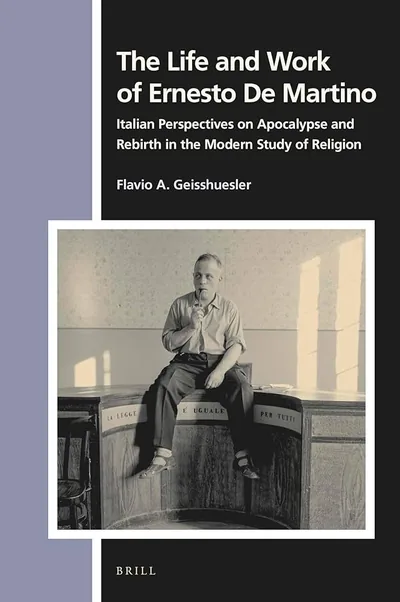
Couverture de The Life and Work of Ernesto de Martino

Brill, Numen Book Series, 2021 En libre accès

The Life and Work of Ernesto de Martino

Une étude de l’historien italien des religions et de sa pensée de la crise, de l’apocalypse et de la renaissance.

Lire gratuitement (s’ouvre dans un nouvel onglet)

Toutes les publications

Éloges pour Erratic Intelligence

“Erratic Intelligence offers penetrating insight into where we are and what happens next if we continue to embrace efficiency as our goal.”

Amy C. Edmondson, Novartis Professor of Leadership and Management, Harvard Business School, and author of Right Kind of Wrong

“Before you read anything else about AI, read this. It may change your life.”

Barry Schwartz, Research Associate, Haas School of Business, UC Berkeley, and co-author of Practical Wisdom and Choose Wisely

“For all the dilemmas and uncertainty ahead, he gives us a path forward and a reason to believe in something better.”

Brad Harris, Professor of Management and Associate Dean, MBA/EMBA Programs, HEC Paris

03Conférences

Conférences et échanges.

Lire la transcription (en anglais)

My heart is pumping, and I’m quite nervous. My mind is jumping around like a monkey from one branch to the next on a tree. Zipper, meditation, presentation, cappuccino, pizza. Always go to the pizza at the end. This is my mind.

I am trained as a historian of Indo-Tibetan religions, which means that I study very old texts that are written in Sanskrit and in Tibetan languages. And meditation has become one of our main means in our society to deal with stress. How meditation, or mindfulness meditation, works is by focusing one’s attention on an object, such as the natural flow of our breath. In a way, what meditation does is it disattends to these discursive thoughts that keep running through our minds, and it disrupts this identification with the monkey mind. We slow down, we get present-centered, and the monkey, in a way, relaxes. And so we can do this together right now, just for one second maybe. All of us just close our eyes, take a deep breath, and just feel our bodies in this very moment.

Now, this kind of felt good to me. I’m here to introduce a new paradigm of meditation research. These practices are usually marked by a very open, spacious, and kind of unstructured approach to reality. Here, we find meditators, like here, sitting on top of mountains, on the slopes of mountains, and they gaze into the blue skies for extended periods of time. And what happens is that as they do this, they start to perceive certain things. Visions start to come up quite naturally and automatically. And so I call these practices participant-spontaneous forms of meditation, because it’s as if by looking at reality in an unstructured way, reality itself grips us, or it manifests to us in an automatic way, and we start to appreciate things that we haven’t seen before.

This, too, can be done right now, right here. I mean, all of us can just let our gazes kind of fly across the panorama of this room, and you’ll see stuff you haven’t seen before. In a way, I believe that these types of techniques and this endless possibility and potential for vision is deeply connected to our passions. Passions, too, cannot be created. We’re usually gripped by our interests. And so in a way, me standing here today is the result of me following my monkey mind and becoming a speaker in front of you, sharing my knowledge with you guys.

I come to the second set of techniques. They usually consist out of two stages. In a first stage, the meditators visualize themselves and they identify with a deity. They do this over and over again, taking on the various characteristics of the god, like here, for example, in this mandala. And then in a second stage, they take on this identity, they embody it, and they act it out, and they perform various physical practices. And so these techniques I define as predictive-executive forms of meditation, because here we’re no longer participating in this kind of natural unfolding of reality, but much rather we’re setting ourselves up to take on a specific identity, we apply it, and then we test it in reality.

And so in a way, this too can be related to my experience standing in front of you right now. I remember when I first started out lecturing, I had a course of 140 students at the University of Virginia before I even finished a PhD, and I was so nervous that I kind of crafted myself this Flavio lecturer personality, and I was like, “Fact one, fact two, fact three.” It was like a reading, or a speaking Wikipedia entry. There was hardly any presence in that, the poor students. But it was over time, as I was practicing and repeating and kind of getting comfortable with this persona that I’ve crafted, that I was able to integrate form and freedom, structure and spontaneity, this public persona and the more intimate sense of self, which I hope is flowing through this talk today.

Become the Monkey! A New Paradigm for Meditation Research

Conférence de recherche, Azrieli Fellows Program, 2022. Sur la dimension expérimentale et déstabilisante de la méditation, et sur ce qu’elle implique pour la recherche sur la méditation.

Voir la conférence complète (21 min) sur YouTube (s’ouvre dans un nouvel onglet)
Lire la transcription (en anglais)

So you can say, “Hey, this is horrible. We need to stop this. I will never, ever use AI. I’m throwing away my phone.” As soon as you turn on your phone, you’re using AI, right? People underestimate the pervasiveness of this technology.

But the point is, you have people who say, “Let’s return to the human”: restore presence, authorship, embodiment, slow reading, ethical judgment. I mean, this is my world, right? I am the humanities guy. I have two PhDs in the humanities. If you go on LinkedIn today, you have a lot of people that say, “Ah, the humanities, they will save us,” right?

But the secret is, and nobody talks about this, and nobody wants to talk about this, because the only thing that they’re not critical of is, in a way, their own thinking: the humanities, with the anti-foundationalist turn since the ’50s, ’60s, what is the French theory in France, has destroyed any sort of clear human value. Any sort of humanistic anchor that might have been there has been destroyed. And in many ways, if you read Barthes or Foucault, or you read Derrida, and it starts with Saussure, if you read these people, you can see how AI is having a field day with it. It is a dream.

If reality is completely detached from the text, and the text is just floating on top, and it’s authorless in a way, what is AI doing? It’s like, “Oh yeah, this is my world. Let’s go.” Right? This is a collaboration. Nobody’s talking about it, but the humanities are very much involved in this process, and they are not the solution to this problem. Believe me.

On screen, the film names the steps of the argument: the limits of refusal; the promise of a “return to the human”; a critique from within; the humanistic anchor; the intellectual lineage of Roland Barthes, Michel Foucault, Jacques Derrida and Ferdinand de Saussure; text without an author; and the consequence: the humanities are involved in the process they seek to resist.

Can the humanities save us from AI?

Minds and Intelligences Research Centre, Université Macquarie, mai 2026 1 min 26 s

04Université de Sydney

Enseignement

J’enseigne le tibétain classique, le sanskrit et l’histoire de la pensée et de la pratique bouddhiques, toujours à partir des sources. Depuis mon arrivée à Sydney en 2024, j’ai conçu trois nouvelles unités d’enseignement, et j’accueille des doctorant·es en études tibétaines et bouddhiques, en histoire des religions ainsi qu’en religion et technologie.

Enseignement et encadrement

05Répertoire

Chaque langue déplace la question.

J’ai étudié plus d’une douzaine de langues modernes et classiques, que j’utilise de différentes manières dans mes recherches, mon enseignement et ma vie quotidienne. Passer de l’une à l’autre m’a appris à me demander si une idée familière (l’esprit, la liberté, l’autorité) signifie la même chose dans un autre contexte.

Le répertoire ci-dessous distingue les langues que je pratique couramment, celles dans lesquelles j’analyse les textes pour mes recherches et celles que j’apprends encore.

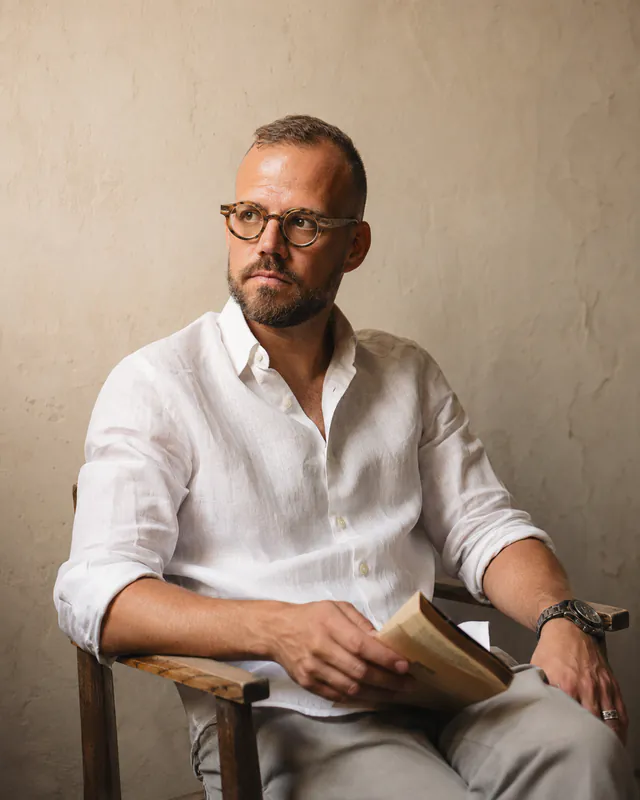
Flavio A. Geisshuesler assis, en chemise de lin blanc, un livre ouvert entre les mains.

23 langues, 17 modernes et 6 classiques. Survolez une langue ou touchez-la pour voir son nom en français, mon niveau et s’il s’agit d’une langue moderne ou classique.

Six de ces langues sont celles dans lesquelles je vis. Les autres sont des langues de travail qui gardent des portes ouvertes : sur les personnes, les lieux et les archives.

06Au-delà de l’université

Toute cette intelligence, que nous fait-elle ?

Une réponse plus rapide est utile. Elle ne règle pas la question de ce que nous devons faire, ni de ce que nous devons continuer d’apprendre. En changeant nos outils, comment nous changeons-nous nous-mêmes ? Cette question a quitté la salle de séminaire, et je la porte au-delà de l’université de trois manières.

Film 2:56 Un portrait animé

Two worlds, one question.

Un court portrait animé : de l’étude de la méditation bouddhique à l’école de commerce, et la question à laquelle ces deux mondes sont aujourd’hui confrontés. 2 min 56 s.

Lire la transcription (en anglais)

Meet Flavio Geisshuesler, a university professor and a global authority on the study of Buddhist meditations across India, Tibet, and the Himalayas. With dual PhDs in the history of religions, Flavio’s expertise spans teaching on four continents, highlighting a profound understanding of psychophysical practices that invigorate, engage, and connect.

Unlike the solitary and passive methods often found in the West, Flavio’s focus is on meditation as a dynamic interplay of aesthetics, vigor, and social integration. A dedicated practitioner and certified teacher, he has studied with revered yogis and masters worldwide.

Flavio’s academic journey transcends traditional boundaries, integrating philosophy, linguistics, cognitive sciences, neuroscience, and artificial intelligence. This interdisciplinary blend empowers him to draw surprising parallels and forge connections across various knowledge domains.

As a prolific author and speaker, Flavio champions meditation as a transformative “technology of change,” designed to help individuals balance the paradox between stability and growth, enhancing personal and professional development.

Then he did something unusual for a scholar of his standing. He went to business school. An Executive MBA from HEC Paris. Coaching training at INSEAD. Executive education at the London School of Economics. A second language for his work: the language of organizations, decisions, and change.

Today he works in both worlds at once. Because both, he argues, now face the same question. AI is built to predict. And anything predictable can now be produced faster, cheaper, and without us.

What remains ours when intelligence is everywhere? Not output. Not information. What remains is deeper: attention, judgment, experience, responsibility, and the courage to depart from the pattern. None of it can be installed. It has to be formed, in people, over time.

And how human beings are formed is the question Flavio has studied his entire career. Erratic Intelligence, the first book in his Technopsychology Trilogy, is a field guide to the capacities that become more valuable, not less, as machines improve.

He takes the argument into boardrooms, universities, and leadership teams. On four continents. In four languages. Because AI can produce the answer. It cannot produce the person who can answer for it.

Invite Flavio to speak.

On screen: an animated portrait in line drawings, with key words as captions: the three business-school credentials (Executive MBA, HEC Paris; Executive Coaching Certificate, INSEAD; Executive education, London School of Economics), the four languages (English, German, French, Italian) and the cover of Erratic Intelligence. At the end: Invite Flavio to speak, flaviogeisshuesler.com.

Télécharger (1080p) MP4, 23 Mo

La trilogie

Erratic Intelligence: Leadership in the Age of AI ouvre la Technopsychology Trilogy, qui se demande comment la technologie façonne les personnes qui l’utilisent, et comment nous pouvons façonner cette relation de manière délibérée. Le premier volume défend la capacité de remettre en question une direction familière, d’en risquer une autre et de rester comptable de ce choix.

Le livre (s’ouvre dans un nouvel onglet)

Conférences

J’interviens dans des universités, des congrès et des rencontres de dirigeants sur l’IA et sur ce qu’en sait l’histoire des religions, de ma keynote The Straight Line Is Free à une conférence sur ce qui donne à nos récits sur l’IA des accents si apocalyptiques.

Conférences

Ce travail indépendant est distinct de ma fonction universitaire.

07Contact

Prendre contact.

Pour une collaboration de recherche, l’encadrement doctoral et les conférences universitaires, écrivez à flavio.geisshuesler@sydney.edu.au. Pour les interventions et les autres invitations, écrivez à contact@flaviogeisshuesler.com.