Vorträge

Stellen Sie die Annahmen Ihres Publikums auf die Probe.

Führung. KI. Und was die Religionsgeschichte über beides weiss.

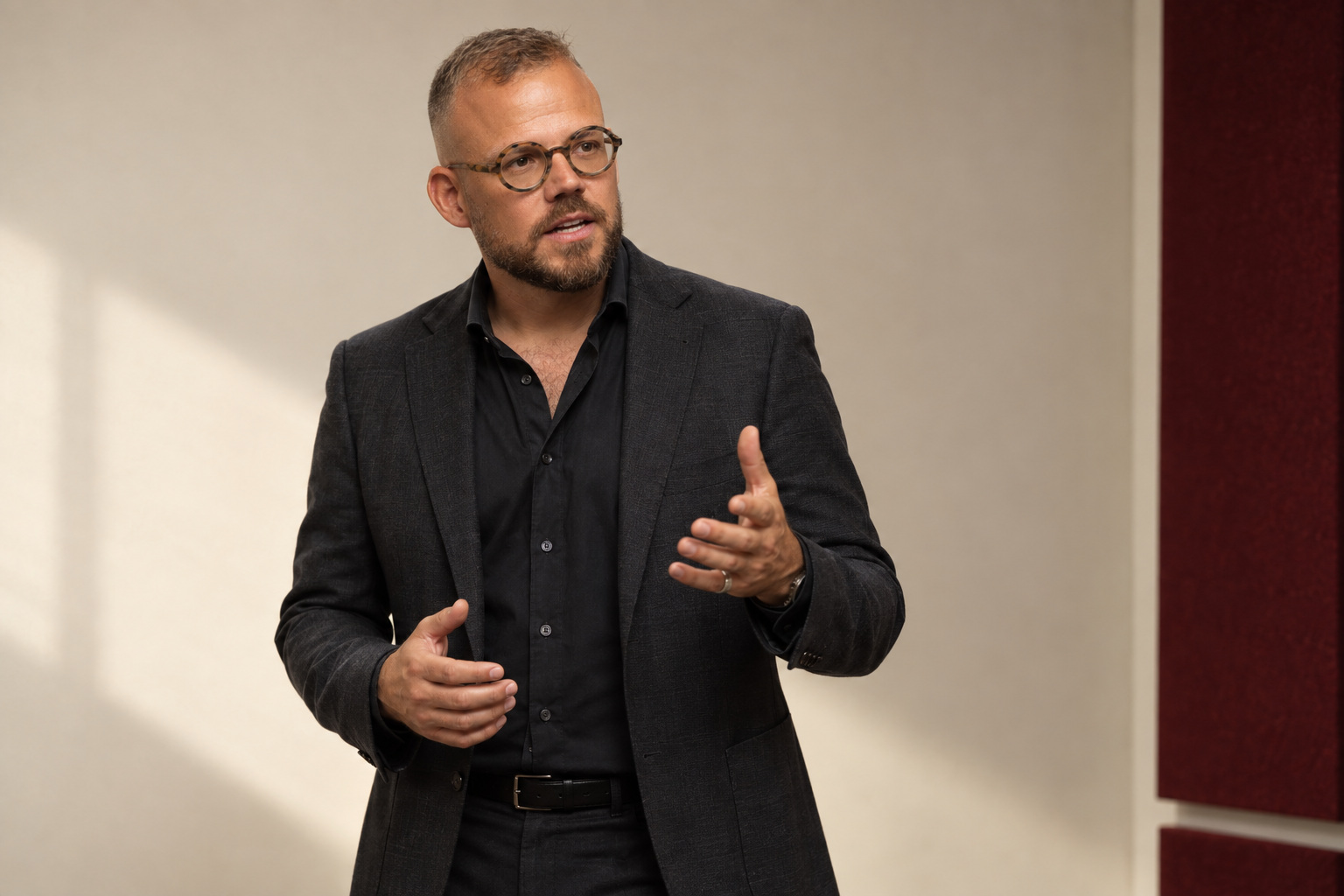
Ich spreche an Universitäten, Konferenzen und Treffen von Führungskräften, und jeder Vortrag erwächst aus meiner Forschung: wie Menschen Krisen begegnen, wem sie als Autorität vertrauen und welche Geschichten sie erzählen, wenn die Zukunft ungewiss wird. Meine Vorträge halte ich auf Englisch, Deutsch, Französisch und Italienisch.

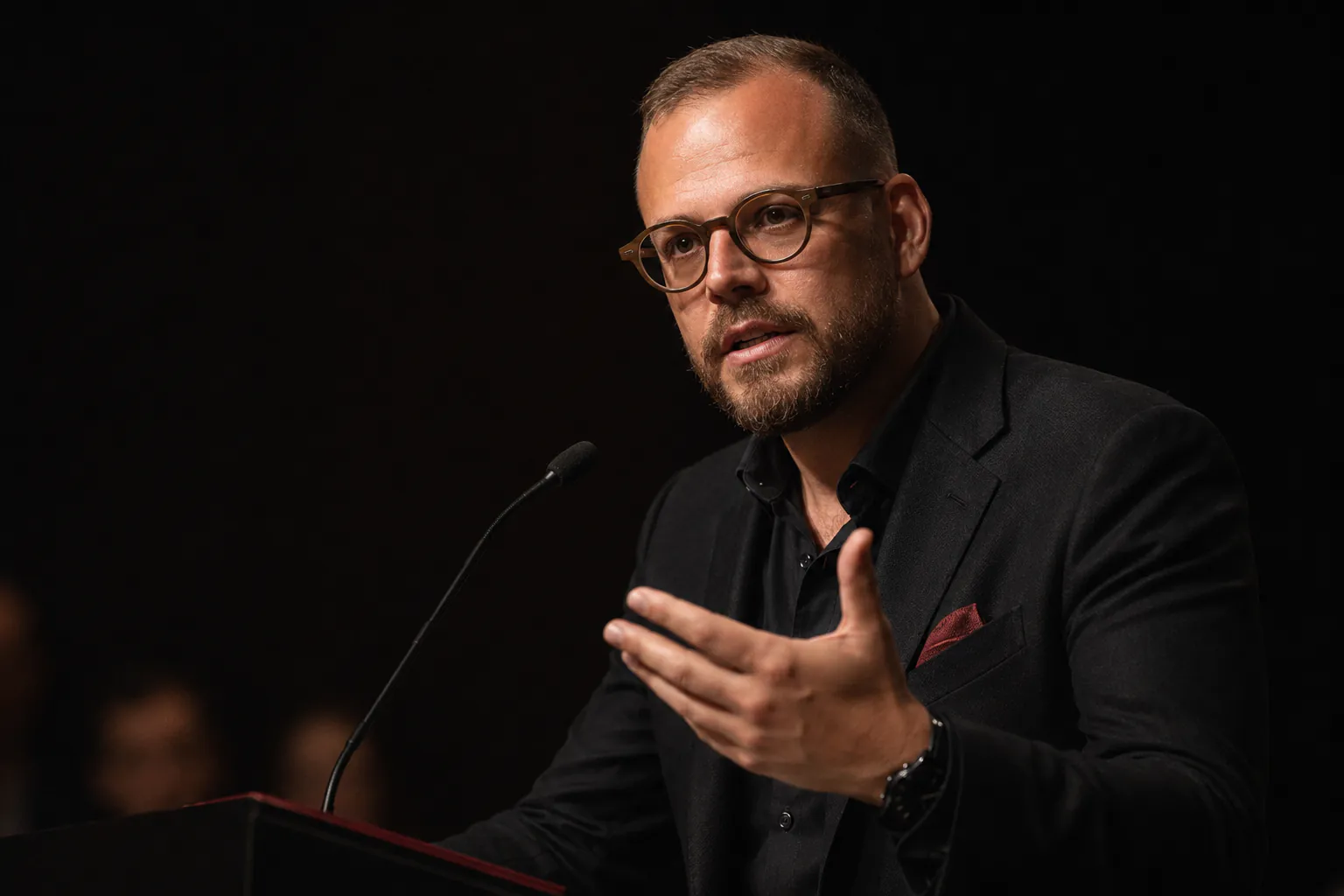
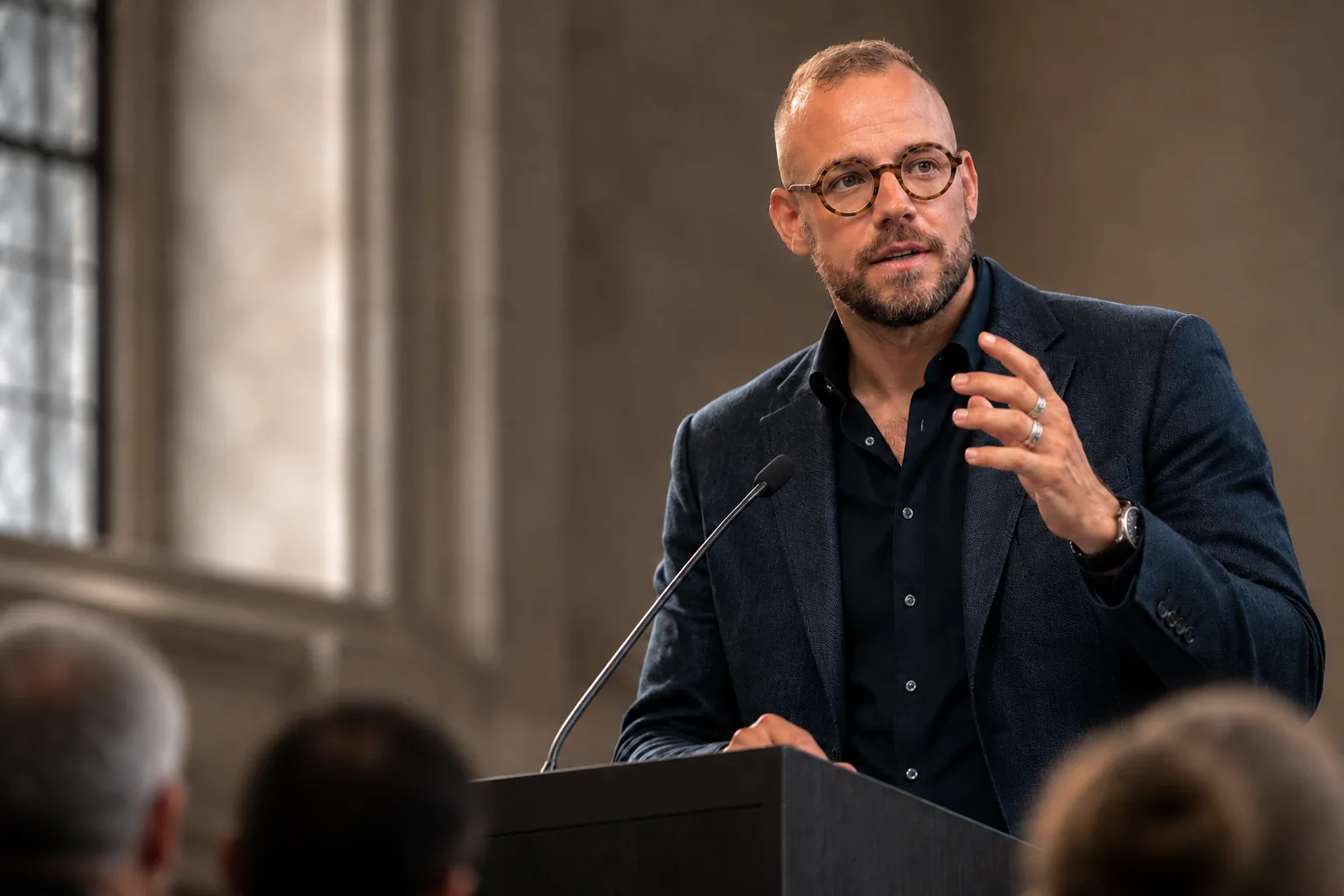
Flavio A. Geisshuesler spricht an einem Rednerpult vor Publikum.

Flavio bei ABC Radio National

Flavio bei ABC Radio National

Flavio sprach mit James Carleton und Michael Muthukrishna in God Forbid über KI und religiöse Vorstellungswelten: die Überzeugungen, Versprechen und Ängste, die unsere technologische Zukunft prägen.

The AI Apocalypse: Human salvation or human extinction?

God Forbid · ABC Radio National · · 54:36

01Filme

Aufgezeichnete Vorträge.

Transkript lesen (Englisch)

For about a century, organizations rewarded one thing above everything else: the straight line. Be predictable, be consistent, do it the same way every time. And it worked, because predictability was scarce, and so we paid well for it.

Now, that is over. Anything predictable is now close to free. A machine does it faster than you, and it does it at three in the morning. So the premium moves, and it moves to exactly the territory we spent a hundred years training out of people: ambiguity, contradiction, emotion, wandering attention, the willingness to carry a moral risk instead of handing it off. On a performance review, every one of those looks like a defect. Now, every one of them is the part of you a model cannot replicate.

In 1971, the organizational theorist James March argued that companies needed a technology of foolishness. Most of them built the opposite. They can’t afford that anymore.

I’m a historian of religion, so I recognize the two boldest and loudest stories about AI. One is an apocalypse. The other is a paradise. Both let you skip the thinking. The interesting ground is in between, and that’s where leadership actually happens.

AI is built to predict. Leadership begins there where prediction ends.

The Straight Line Is Free, in 90 Sekunden

Meine zentrale Keynote in Kürze: warum ein Jahrhundert, in dem das Berechenbare belohnt wurde, zu Ende geht, und was Führungskräfte weiterhin selbst beurteilen müssen.

Transkript lesen (Englisch)

What people need today is not calm. What they need is the capacity to act well under conditions of radical uncertainty.

I’m currently working on a book project that focuses on the activating and world-engaging dimensions of Buddhist meditation. In fact, I believe that particularly the tantric traditions have never really been about retreating from the world, but much rather about meeting it with clarity, with courage, with skill. And I think that this matters right now, probably more than ever before.

We’re living through a period of tremendous civilizational transformation. They need to be able to thrive in change. And they need to be able to take decisions in moments when it feels like the ground is moving below their feet.

And so the Buddhist traditions have been refining exactly these sorts of capacities for the last two and a half thousand years. And so part of my work here is bringing those types of resources into the present moment.

On screen: key words as captions, an animated statue of the Buddha, Earth at night, the Frontier supercomputer, a glacier (1985 → 2022), the Quadrangle of the University of Sydney, and murals of the Lukhang Temple, Lhasa. At the end: Invite Flavio to speak, flaviogeisshuesler.com/speaking, then a short outtake.

Fotografie des Supercomputers Frontier: «Frontier Supercomputer (2) (öffnet in einem neuen Tab)» von OLCF am ORNL, CC BY 2.0 (öffnet in einem neuen Tab).

What people need today

Ein kurzer Film über Meditation, Ungewissheit und die Grenzen der Ruhe, aus meinem aktuellen Buchprojekt. 1 Min. 9 s.

Transkript lesen (Englisch)

My heart is pumping, and I’m quite nervous. My mind is jumping around like a monkey from one branch to the next on a tree. Zipper, meditation, presentation, cappuccino, pizza. Always go to the pizza at the end. This is my mind.

I am trained as a historian of Indo-Tibetan religions, which means that I study very old texts that are written in Sanskrit and in Tibetan languages. And meditation has become one of our main means in our society to deal with stress. How meditation, or mindfulness meditation, works is by focusing one’s attention on an object, such as the natural flow of our breath. In a way, what meditation does is it disattends to these discursive thoughts that keep running through our minds, and it disrupts this identification with the monkey mind. We slow down, we get present-centered, and the monkey, in a way, relaxes. And so we can do this together right now, just for one second maybe. All of us just close our eyes, take a deep breath, and just feel our bodies in this very moment.

Now, this kind of felt good to me. I’m here to introduce a new paradigm of meditation research. These practices are usually marked by a very open, spacious, and kind of unstructured approach to reality. Here, we find meditators, like here, sitting on top of mountains, on the slopes of mountains, and they gaze into the blue skies for extended periods of time. And what happens is that as they do this, they start to perceive certain things. Visions start to come up quite naturally and automatically. And so I call these practices participant-spontaneous forms of meditation, because it’s as if by looking at reality in an unstructured way, reality itself grips us, or it manifests to us in an automatic way, and we start to appreciate things that we haven’t seen before.

This, too, can be done right now, right here. I mean, all of us can just let our gazes kind of fly across the panorama of this room, and you’ll see stuff you haven’t seen before. In a way, I believe that these types of techniques and this endless possibility and potential for vision is deeply connected to our passions. Passions, too, cannot be created. We’re usually gripped by our interests. And so in a way, me standing here today is the result of me following my monkey mind and becoming a speaker in front of you, sharing my knowledge with you guys.

I come to the second set of techniques. They usually consist out of two stages. In a first stage, the meditators visualize themselves and they identify with a deity. They do this over and over again, taking on the various characteristics of the god, like here, for example, in this mandala. And then in a second stage, they take on this identity, they embody it, and they act it out, and they perform various physical practices. And so these techniques I define as predictive-executive forms of meditation, because here we’re no longer participating in this kind of natural unfolding of reality, but much rather we’re setting ourselves up to take on a specific identity, we apply it, and then we test it in reality.

And so in a way, this too can be related to my experience standing in front of you right now. I remember when I first started out lecturing, I had a course of 140 students at the University of Virginia before I even finished a PhD, and I was so nervous that I kind of crafted myself this Flavio lecturer personality, and I was like, “Fact one, fact two, fact three.” It was like a reading, or a speaking Wikipedia entry. There was hardly any presence in that, the poor students. But it was over time, as I was practicing and repeating and kind of getting comfortable with this persona that I’ve crafted, that I was able to integrate form and freedom, structure and spontaneity, this public persona and the more intimate sense of self, which I hope is flowing through this talk today.

Become the Monkey! A New Paradigm for Meditation Research

Forschungsvortrag, Azrieli Fellows Program, 2022. Über die experimentelle und disruptive Seite der Meditation und was sie für die Meditationsforschung bedeutet.

Den ganzen Vortrag ansehen (21 Min.) auf YouTube (öffnet in einem neuen Tab)
Transkript lesen (Englisch)

So you can say, “Hey, this is horrible. We need to stop this. I will never, ever use AI. I’m throwing away my phone.” As soon as you turn on your phone, you’re using AI, right? People underestimate the pervasiveness of this technology.

But the point is, you have people who say, “Let’s return to the human”: restore presence, authorship, embodiment, slow reading, ethical judgment. I mean, this is my world, right? I am the humanities guy. I have two PhDs in the humanities. If you go on LinkedIn today, you have a lot of people that say, “Ah, the humanities, they will save us,” right?

But the secret is, and nobody talks about this, and nobody wants to talk about this, because the only thing that they’re not critical of is, in a way, their own thinking: the humanities, with the anti-foundationalist turn since the ’50s, ’60s, what is the French theory in France, has destroyed any sort of clear human value. Any sort of humanistic anchor that might have been there has been destroyed. And in many ways, if you read Barthes or Foucault, or you read Derrida, and it starts with Saussure, if you read these people, you can see how AI is having a field day with it. It is a dream.

If reality is completely detached from the text, and the text is just floating on top, and it’s authorless in a way, what is AI doing? It’s like, “Oh yeah, this is my world. Let’s go.” Right? This is a collaboration. Nobody’s talking about it, but the humanities are very much involved in this process, and they are not the solution to this problem. Believe me.

On screen, the film names the steps of the argument: the limits of refusal; the promise of a “return to the human”; a critique from within; the humanistic anchor; the intellectual lineage of Roland Barthes, Michel Foucault, Jacques Derrida and Ferdinand de Saussure; text without an author; and the consequence: the humanities are involved in the process they seek to resist.

Can the humanities save us from AI?

Minds and Intelligences Research Centre, Macquarie University, Mai 2026 1 Min. 26 s

Dieser Frage habe ich ein ganzes Kapitel gewidmetErratic Intelligence · Kapitel 7, «The Accomplice» (öffnet in einem neuen Tab)

02Keynotes

Vier Vorträge, eine Frage.

Jeder Vortrag richtet den Blick der Religionsgeschichte auf eine Frage, die durch künstliche Intelligenz dringlich geworden ist, und jeder wird auf das Publikum und die Frage zugeschnitten, der es sich stellen muss.

Zentrale Keynote Aus Erratic Intelligence (öffnet in einem neuen Tab)

The Straight Line Is Free

Ein Jahrhundert lang belohnten Organisationen das Berechenbare. Heute liefern Maschinen das Berechenbare beinahe gratis, und der Wert verlagert sich zu dem, was jenes Jahrhundert den Menschen abtrainiert hat: Mehrdeutigkeit, schweifende Aufmerksamkeit und die Bereitschaft, moralisches Risiko zu tragen. Als Religionshistoriker weiss ich, wie alt die gegenteilige Versuchung ist: unser Urteil allem zu überlassen, was mit der Autorität der Vorhersage spricht. Krösus vertraute dem Orakel von Delphi und verlor ein Reich. Keith Jarrett, dem man in Köln ein kaum spielbares Klavier hinstellte, gab sein berühmtestes Konzert. Führungskräfte nehmen ein schärferes Gespür dafür mit, wo ein Muster nicht mehr zur Wirklichkeit passt und was sie weiterhin selbst beurteilen müssen.

Für Konferenzen, Verwaltungsräte, Führungsteams und Universitäten.

Gehalten am Minds and Intelligences Research Centre der Macquarie University im Mai 2026.

In 90 Sekunden ansehen
Umsetzung braucht Ordnung. Entdeckung braucht die Freiheit, von ihr abzuweichen.

Zusammenführen · Wiederholen · Optimieren

Berechenbar.

Schnell. Wiederholbar. Lesbar.Es folgt einem Weg, den das System bereits zu belohnen weiss. Unverzichtbar für die Umsetzung; gefährlich als umfassende Vorstellung vom Wert des Menschen.

Umherstreifen · Riskieren · Entdecken

Erratisch

Neugierig. Abweichend. Verantwortlich.Es bleibt bei der unbequemen Frage und wagt eine Antwort, die der Durchschnitt noch nicht verteidigen kann. Unverzichtbar, um eine Zukunft zu finden, deren Umsetzung sich lohnt.

Tiefer denken

The End of the World Is a Very Old Story

Warum die lautesten Geschichten über KI religiös sind.

KI tritt im Gewand zweier der ältesten Geschichten auf, die Menschen über eine neue Macht erzählen: dass sie die Welt zerstören oder retten wird. Als Religionshistoriker lese ich sie wie jede Apokalypse: Wer erzählt sie, was verlangt sie von den Gläubigen, und was blendet sie aus? Die beängstigendste Geschichte über KI schmeichelt zugleich am meisten denen, die sie bauen. Die Keynote stützt sich auf Ernesto de Martino, dessen Arbeit über Kulturen am Ende ihrer Welt Gegenstand meines ersten Buches war. Sie führt das Publikum aus Panik und Hype heraus – in die vielgestaltigen Bereiche dazwischen, wo die wirklichen Entscheidungen über KI getroffen werden. Zudem greift sie auf meine aktuelle Forschung zu den religiösen Grammatiken der künstlichen Intelligenz zurück.

Besonders geeignet für: Konferenzen, Universitäten, öffentliche Vorträge und Klausuren für Führungskräfte

Sendung zum Thema: God Forbid · ABC Radio National · . Flavio sprach mit James Carleton und Michael Muthukrishna in God Forbid über KI und religiöse Vorstellungswelten: die Überzeugungen, Versprechen und Ängste, die unsere technologische Zukunft prägen.

KI in der Arbeitswelt

The Cuckoo in the Loop

Wie KI Sie ersetzt, ohne Ihnen die Stelle zu nehmen.

Eine Organisation kann weiterhin hervorragende Arbeit leisten und dabei unbemerkt aufhören, die Menschen auszubilden, die sie eines Tages führen könnten. KI macht das leicht. Die Organisation produziert mehr, die Stellen bleiben, aber die junge Juristin schreibt den misslungenen ersten Entwurf nicht mehr. Die Fehler, an denen früher die nächste Generation wuchs, fängt nun ein System auf, das sie nicht braucht. Beim Kuckuck ist es genauso: Der Wirtsvogel erlebt die produktivste Saison seines Lebens, während er ein fremdes Küken füttert – und seine eigenen Jungen werden nie flügge. Die Keynote zeigt, wo das geschieht und wie Sie entscheiden, was Sie automatisieren, ergänzen, schützen, verbieten und ablehnen sollten. Sie stützt sich auf den zweiten Band der Technopsychology Trilogy, der derzeit entsteht, und auf meine Lehre, in der Studierende lernen, KI zu nutzen und dabei ihre akademische Eigenständigkeit zu bewahren.

Besonders geeignet für: Führungsteams, Kanzleien und Beratungsunternehmen, Verantwortliche für Personal und Weiterbildung sowie Universitäten

Explorative KI

The Polyphonic War Room

Schaffen Sie einen Raum, in dem keine falsche Antwort unwidersprochen bleibt.

Fragen Sie eine KI nach einer schwierigen Entscheidung, erhalten Sie eine einzige, flüssig formulierte Antwort. Genau das ist das Problem. Diese Keynote nutzt die Maschine umgekehrt: um einen Plan zu erschüttern, bevor die Wirklichkeit es tut. Im Strategieraum der Gegenstimmen vertreten mehrere KI-Agenten unterschiedliche Positionen zur selben Entscheidung – darunter eine optimierende, eine regulierende und eine widersprechende Stimme sowie eine für die Menschen, die die Entscheidung betrifft. Jede soll sichtbar machen, was die anderen ausblenden. Die Idee knüpft an den russischen Literaturtheoretiker Michail Bachtin an, der Dostojewskis Romane als Welten las, in denen keine einzelne Stimme das Gespräch beenden darf. Das Ergebnis ist eine Landkarte der wirklichen Zielkonflikte. Das Urteil bleibt bei den Menschen im Raum.

Besonders geeignet für: Strategieklausuren, Verwaltungsräte sowie Innovations- und KI-Teams

Aus Erratic Intelligence (öffnet in einem neuen Tab)

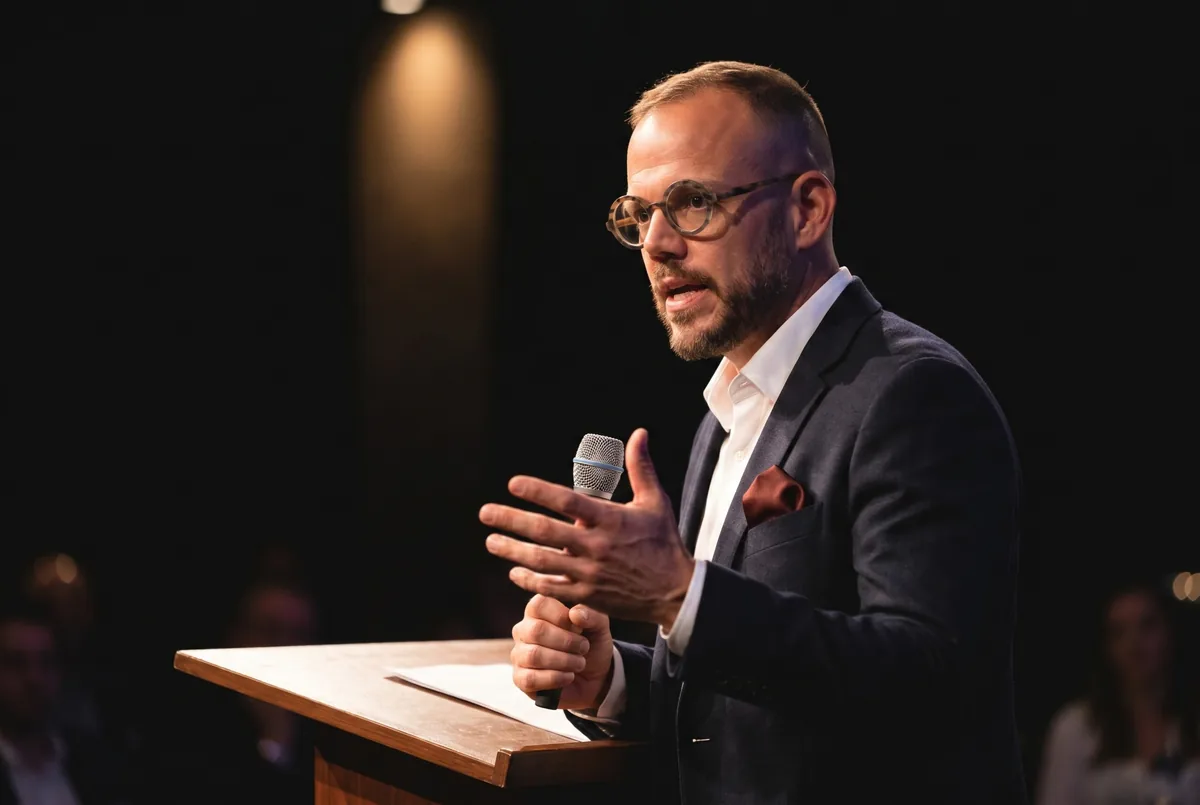
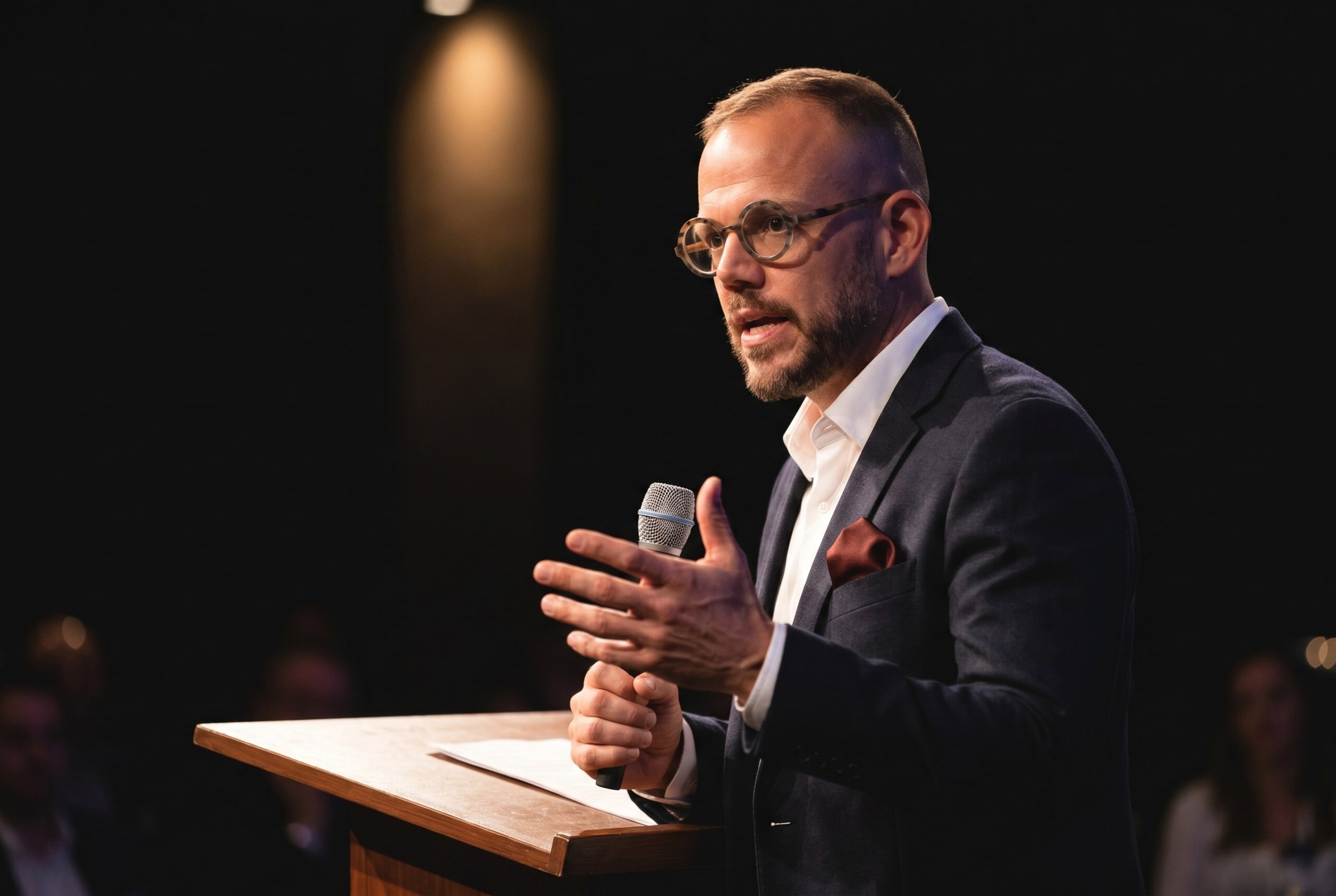
Flavio A. Geisshuesler spricht in ein Mikrofon, eine Hand ausgestreckt.

03Publikum

Stimmen aus dem Publikum.

“He spent forty-five minutes arguing that our biggest efficiency win was a liability, and by the end our CFO agreed with him. The leadership team was still arguing about it in the bar two hours later.”

“Uncomfortable in the way you actually want. Our partners spent the afternoon session arguing about whether we still know how to make a partner. Nobody has asked that here in a decade.”

“I have booked a lot of closing keynotes and most of them are a victory lap. People stayed in the hall afterwards. Several of them were crying, which I did not expect from a technology conference.”

“My thanks to Flavio for the insightful (and energetic!) talk.”

Stimme aus dem Publikum Macquarie University
Öffentliche Rückmeldung (öffnet in einem neuen Tab)

04Rückblick

Ausgewählte Vorträge und Konferenzbeiträge.

  1. Erratic Intelligence: AI, Religion, and the Future of the Human. Minds and Intelligences Research Centre, Macquarie University, Sydney, Mai 2026.
  2. Gesprächsrunde: The Future of Contemplation. University of Sydney, Oktober 2025.
  3. Beyond Mindfulness: Empowering Leadership with Tibetan Buddhist Wisdom. University of Sydney Alumni Festival, November 2024.
  4. Cosmic Eggs, Domesticated Sheep, and Flying Kings. 16. Seminar der International Association for Tibetan Studies, Prag, Juli 2022.
  5. Ernesto de Martino and the Eschatological Turn in Continental Philosophy. Universität zu Köln, November 2021.
  6. Ernesto de Martino (1908–1965) as a Classic Figure in the Twentieth-Century Study of Religion. Schweizerische Gesellschaft für Religionswissenschaft (SGR–SSSR), Zürich, März 2021.
  7. Panelleitung: «Ernesto de Martino’s Multiple Identities». 16. EASR-Konferenz, Bern, 2018.

05Einladungen

Flavio für einen Vortrag einladen.

Bitte nennen Sie in Ihrer Nachricht das Datum, das Publikum und was der Vortrag bewirken soll. Die Formate reichen von einer 25-minütigen Keynote bis zu einer halbtägigen Veranstaltung, auf Englisch, Deutsch, Französisch oder Italienisch.

Vorträge an Universitäten und Forschungsinstituten
flavio.geisshuesler@sydney.edu.au
Keynotes, Briefings und andere Veranstaltungen
contact@flaviogeisshuesler.com

Keynotes und Briefings für Organisationen werden unabhängig von meiner Tätigkeit an der Universität vereinbart.

Persönliche Beratung für Führungskräfte: Erratic Intelligence (öffnet in einem neuen Tab)

Medienanfragen und Interviews zum Buch: die Medienseite von Errāticus Press (öffnet in einem neuen Tab)

Für Veranstaltende

Wissenschaftler · Autor · Berater · Redner

Kurzbiografie

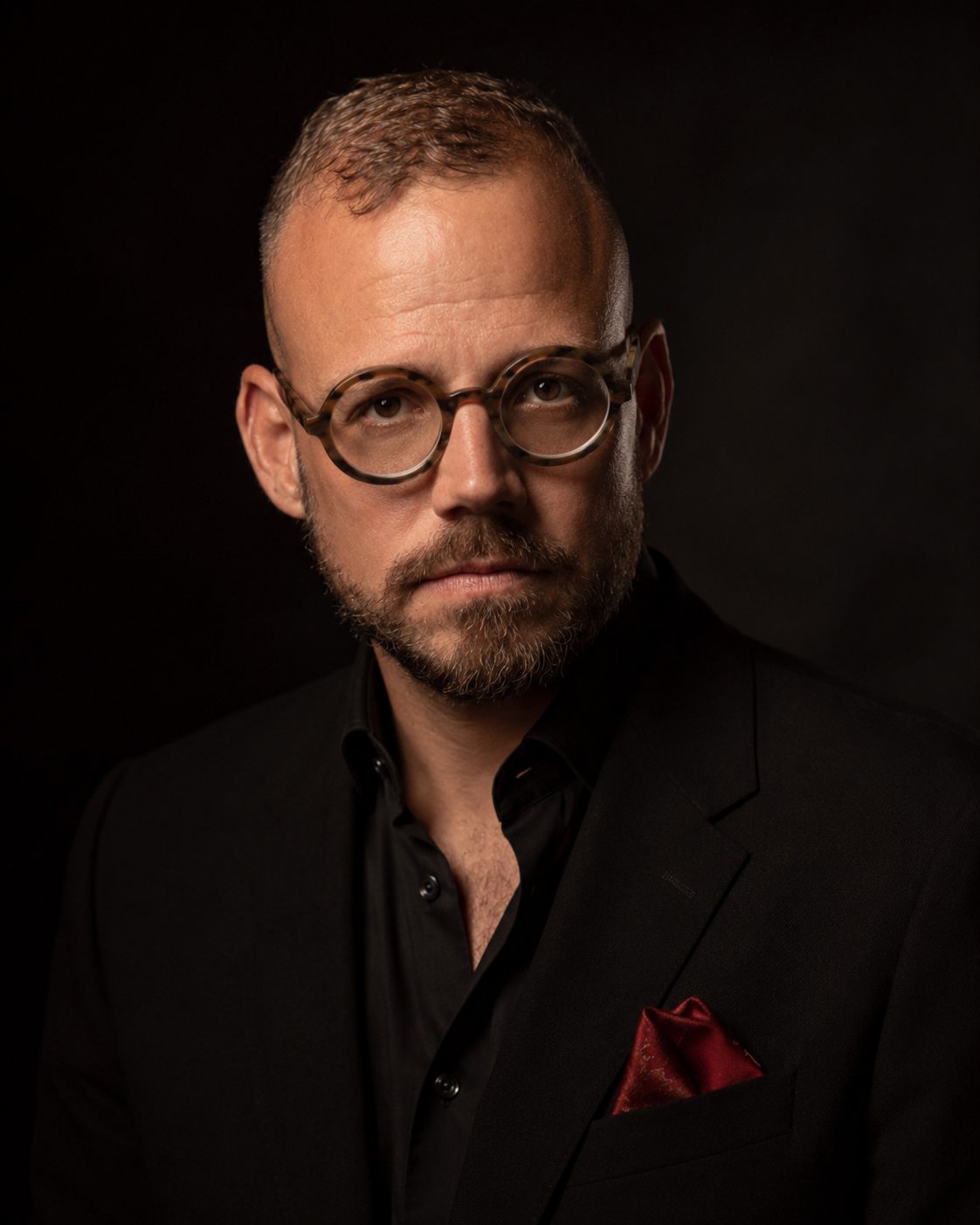
Flavio A. Geisshuesler ist Khyentse Macready Senior Lecturer in Tibetan Buddhism an der School of Languages and Cultures der University of Sydney. Er ist Religionshistoriker, Autor, Berater und Redner und erforscht, wie Menschen geprägt werden und wie sie sich verändern. Seine Arbeit verbindet kontemplative Traditionen, Führung und die Anforderungen, die KI an das menschliche Urteilsvermögen stellt.

Anmoderation

Für The Straight Line Is Free

Unser Redner ist Flavio A. Geisshuesler, Religionshistoriker und Forscher zum tibetischen Buddhismus, Autor und persönlicher Berater. Mit zwei Doktortiteln, einem Executive MBA der HEC Paris und dem INSEAD Coaching Certificate geht er einer Frage nach, die seine gesamte Arbeit durchzieht: Wie lernen Menschen, anders zu sehen, zu denken und zu handeln? Seine Keynote heisst «The Straight Line Is Free».

Fotografien