Storico delle religioni Università di Sydney

Come le tradizioni religiose plasmano il modo in cui le persone affrontano la crisi.

Sono Flavio A. Geisshuesler, Khyentse Macready Senior Lecturer in Tibetan Buddhism presso la School of Languages and Cultures dell’Università di Sydney. Studio la meditazione nel buddhismo indo-tibetano e la storia dello studio delle religioni, e ho rivolto questo lavoro a una domanda che il nostro tempo pone con nuova urgenza: che cosa può dirci la lunga storia delle religioni sulla vita con l’intelligenza artificiale. Me ne occupo nella ricerca e nella didattica, così come in libri e conferenze per un pubblico al di fuori dell’università.

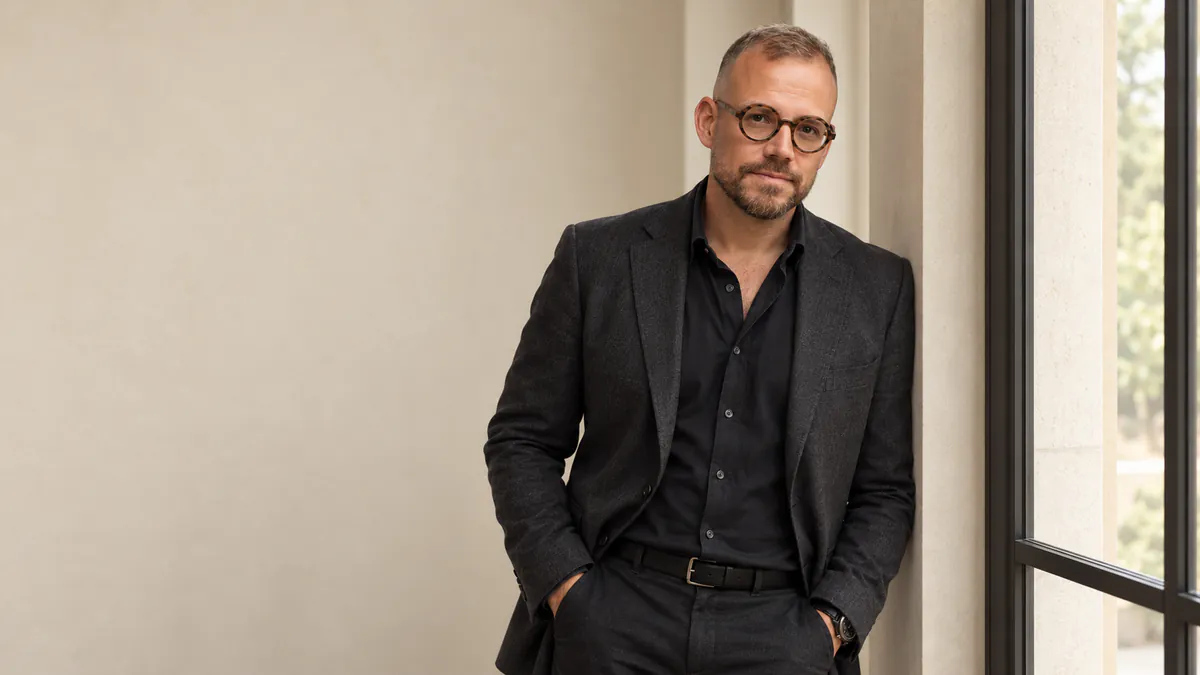
Flavio A. Geisshuesler in giacca scura, in piedi accanto a una finestra illuminata dal sole.

Flavio su ABC Radio National

IA, salvezza e le storie che raccontiamo sul futuro.

Flavio ha dialogato con James Carleton e Michael Muthukrishna a God Forbid sull’IA e l’immaginario religioso: le convinzioni, le promesse e le paure che plasmano il nostro futuro tecnologico.

The AI Apocalypse: Human salvation or human extinction?

God Forbid · ABC Radio National · · 54:36

01Ricerca

Due filoni di ricerca in corso.

Entrambi nascono dalla stessa domanda: come le persone attingono alle risorse religiose e contemplative quando il mondo su cui fanno affidamento comincia a vacillare.

Monografia in preparazione

Beyond Calm

Meditation as a Cultural Technology of Crisis, Vision, and Agency

La cultura contemporanea tratta per lo più la meditazione come una tecnica per raggiungere la calma. Questo libro sostiene che la meditazione buddhista sia qualcosa di più ampio: una tradizione attiva, rivolta al mondo, attraverso la quale le comunità hanno affrontato le crisi, coltivato una visione e agito nel mondo.

Il progetto in dettaglio

Progetto in corso

Religious Grammars of Artificial Intelligence

Authority, Mediation, and the Human

Il dibattito pubblico sull’IA oscilla tra promesse di salvezza e moniti di catastrofe. Questo progetto legge entrambi come un unico racconto apocalittico e ricostruisce le grammatiche religiose più antiche che vi operano, dalla creazione e dalla rivelazione fino al giudizio e alla questione delle persone non umane.

Il progetto in dettaglio

02Pubblicazioni

Libri

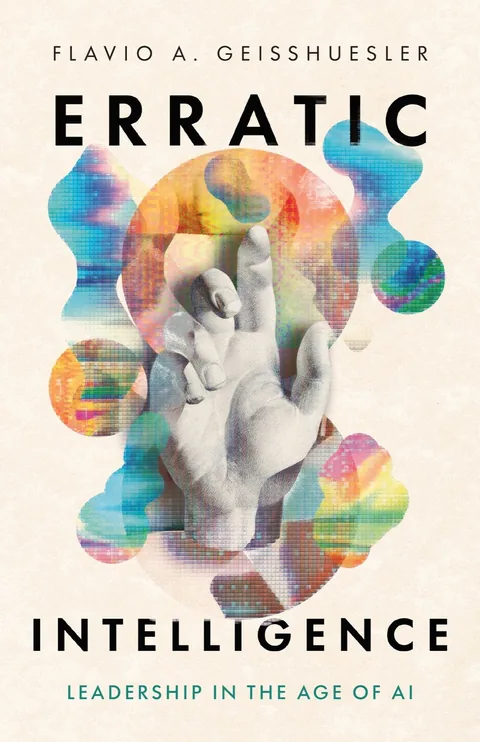
Copertina di Erratic Intelligence: Leadership in the Age of AI

Divulgazione

Errāticus Press, 2026

Erratic Intelligence: Leadership in the Age of AI

Il primo volume della Technopsychology Trilogy, scritto per lettori anche al di fuori dell’università, su ciò che i leader devono ancora giudicare da sé quando le macchine producono risposte convincenti.

Scheda del libro (si apre in una nuova scheda)
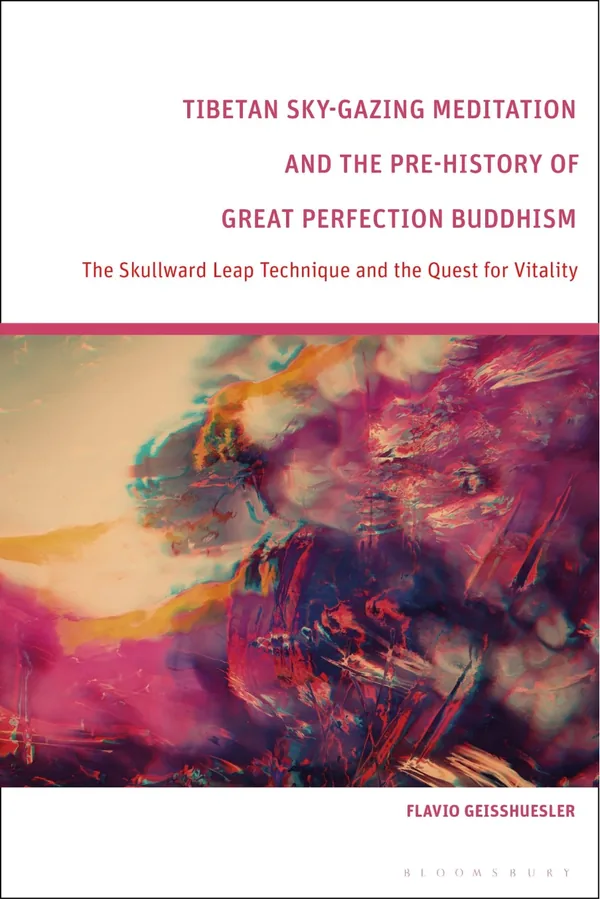
Copertina di Tibetan Sky-Gazing Meditation and the Pre-History of Great Perfection Buddhism

Bloomsbury Academic, 2024 Open access

Tibetan Sky-Gazing Meditation and the Pre-History of Great Perfection Buddhism

Uno studio sullo Skullward Leap, tecnica di contemplazione del cielo della Grande Perfezione, in cui si sostiene che la pratica conservi tracce di un più antico mondo tibetano del cielo e della vitalità, rielaborato nel corso dei secoli all’interno del buddhismo.

Leggi gratuitamente (si apre in una nuova scheda)
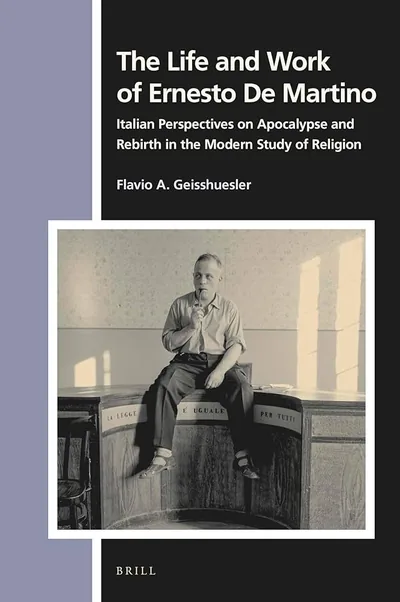
Copertina di The Life and Work of Ernesto de Martino

Brill, Numen Book Series, 2021 Open access

The Life and Work of Ernesto de Martino

Uno studio sullo storico delle religioni italiano e sul suo pensiero intorno a crisi, apocalisse e rinascita.

Leggi gratuitamente (si apre in una nuova scheda)

Tutte le pubblicazioni

Elogi per Erratic Intelligence

“Erratic Intelligence offers penetrating insight into where we are and what happens next if we continue to embrace efficiency as our goal.”

Amy C. Edmondson, Novartis Professor of Leadership and Management, Harvard Business School, and author of Right Kind of Wrong

“Before you read anything else about AI, read this. It may change your life.”

Barry Schwartz, Research Associate, Haas School of Business, UC Berkeley, and co-author of Practical Wisdom and Choose Wisely

“For all the dilemmas and uncertainty ahead, he gives us a path forward and a reason to believe in something better.”

Brad Harris, Professor of Management and Associate Dean, MBA/EMBA Programs, HEC Paris

03Interventi

Conferenze e conversazioni.

Leggi la trascrizione (in inglese)

My heart is pumping, and I’m quite nervous. My mind is jumping around like a monkey from one branch to the next on a tree. Zipper, meditation, presentation, cappuccino, pizza. Always go to the pizza at the end. This is my mind.

I am trained as a historian of Indo-Tibetan religions, which means that I study very old texts that are written in Sanskrit and in Tibetan languages. And meditation has become one of our main means in our society to deal with stress. How meditation, or mindfulness meditation, works is by focusing one’s attention on an object, such as the natural flow of our breath. In a way, what meditation does is it disattends to these discursive thoughts that keep running through our minds, and it disrupts this identification with the monkey mind. We slow down, we get present-centered, and the monkey, in a way, relaxes. And so we can do this together right now, just for one second maybe. All of us just close our eyes, take a deep breath, and just feel our bodies in this very moment.

Now, this kind of felt good to me. I’m here to introduce a new paradigm of meditation research. These practices are usually marked by a very open, spacious, and kind of unstructured approach to reality. Here, we find meditators, like here, sitting on top of mountains, on the slopes of mountains, and they gaze into the blue skies for extended periods of time. And what happens is that as they do this, they start to perceive certain things. Visions start to come up quite naturally and automatically. And so I call these practices participant-spontaneous forms of meditation, because it’s as if by looking at reality in an unstructured way, reality itself grips us, or it manifests to us in an automatic way, and we start to appreciate things that we haven’t seen before.

This, too, can be done right now, right here. I mean, all of us can just let our gazes kind of fly across the panorama of this room, and you’ll see stuff you haven’t seen before. In a way, I believe that these types of techniques and this endless possibility and potential for vision is deeply connected to our passions. Passions, too, cannot be created. We’re usually gripped by our interests. And so in a way, me standing here today is the result of me following my monkey mind and becoming a speaker in front of you, sharing my knowledge with you guys.

I come to the second set of techniques. They usually consist out of two stages. In a first stage, the meditators visualize themselves and they identify with a deity. They do this over and over again, taking on the various characteristics of the god, like here, for example, in this mandala. And then in a second stage, they take on this identity, they embody it, and they act it out, and they perform various physical practices. And so these techniques I define as predictive-executive forms of meditation, because here we’re no longer participating in this kind of natural unfolding of reality, but much rather we’re setting ourselves up to take on a specific identity, we apply it, and then we test it in reality.

And so in a way, this too can be related to my experience standing in front of you right now. I remember when I first started out lecturing, I had a course of 140 students at the University of Virginia before I even finished a PhD, and I was so nervous that I kind of crafted myself this Flavio lecturer personality, and I was like, “Fact one, fact two, fact three.” It was like a reading, or a speaking Wikipedia entry. There was hardly any presence in that, the poor students. But it was over time, as I was practicing and repeating and kind of getting comfortable with this persona that I’ve crafted, that I was able to integrate form and freedom, structure and spontaneity, this public persona and the more intimate sense of self, which I hope is flowing through this talk today.

Become the Monkey! A New Paradigm for Meditation Research

Conferenza accademica, Azrieli Fellows Program, 2022. Sul lato sperimentale e dirompente della meditazione e su ciò che significa per la ricerca sulla meditazione.

Guarda la conferenza completa (21 min) su YouTube (si apre in una nuova scheda)
Leggi la trascrizione (in inglese)

So you can say, “Hey, this is horrible. We need to stop this. I will never, ever use AI. I’m throwing away my phone.” As soon as you turn on your phone, you’re using AI, right? People underestimate the pervasiveness of this technology.

But the point is, you have people who say, “Let’s return to the human”: restore presence, authorship, embodiment, slow reading, ethical judgment. I mean, this is my world, right? I am the humanities guy. I have two PhDs in the humanities. If you go on LinkedIn today, you have a lot of people that say, “Ah, the humanities, they will save us,” right?

But the secret is, and nobody talks about this, and nobody wants to talk about this, because the only thing that they’re not critical of is, in a way, their own thinking: the humanities, with the anti-foundationalist turn since the ’50s, ’60s, what is the French theory in France, has destroyed any sort of clear human value. Any sort of humanistic anchor that might have been there has been destroyed. And in many ways, if you read Barthes or Foucault, or you read Derrida, and it starts with Saussure, if you read these people, you can see how AI is having a field day with it. It is a dream.

If reality is completely detached from the text, and the text is just floating on top, and it’s authorless in a way, what is AI doing? It’s like, “Oh yeah, this is my world. Let’s go.” Right? This is a collaboration. Nobody’s talking about it, but the humanities are very much involved in this process, and they are not the solution to this problem. Believe me.

On screen, the film names the steps of the argument: the limits of refusal; the promise of a “return to the human”; a critique from within; the humanistic anchor; the intellectual lineage of Roland Barthes, Michel Foucault, Jacques Derrida and Ferdinand de Saussure; text without an author; and the consequence: the humanities are involved in the process they seek to resist.

Can the humanities save us from AI?

Minds and Intelligences Research Centre, Macquarie University, maggio 2026 1 min 26 s

04Università di Sydney

Didattica

Insegno tibetano classico, sanscrito e storia del pensiero e della pratica buddhisti, partendo sempre dalle fonti. Da quando sono arrivato a Sydney nel 2024 ho ideato tre nuovi insegnamenti, e accolgo volentieri dottorandi negli studi tibetani e buddhisti, nella storia delle religioni e sul rapporto tra religione e tecnologia.

Didattica e supervisione

05Repertorio

Ogni lingua cambia la domanda.

Ho studiato più di una dozzina di lingue moderne e classiche, usandole in modi diversi nella ricerca, nell’insegnamento e nella vita quotidiana. Passare dall’una all’altra mi ha insegnato a chiedermi se un’idea familiare (mente, libertà, autorità) abbia lo stesso significato in un altro contesto.

Il repertorio qui sotto distingue l’uso fluente, la lettura approfondita per la ricerca e le lingue che sto ancora imparando.

Flavio A. Geisshuesler seduto in camicia di lino bianco con un libro aperto tra le mani.

23 lingue, 17 moderne e 6 classiche. Passando il puntatore su una lingua o toccandola se ne vedono il nome italiano, il mio livello e se è moderna o classica.

Sei di queste sono lingue in cui vivo. Le altre sono lingue di lavoro che tengono aperte le porte verso persone, luoghi e archivi.

06Oltre l’università

Tutta questa intelligenza, che cosa ci sta facendo?

Una risposta più rapida è utile. Non stabilisce però che cosa dovremmo fare, né che cosa dobbiamo continuare a imparare. Mentre cambiamo i nostri strumenti, come stiamo cambiando noi stessi? Questa domanda è uscita dalle aule dei seminari, e io la porto oltre l’università in tre modi.

Film 2:56 Un ritratto animato

Two worlds, one question.

Un breve ritratto animato: dallo studio della meditazione buddhista alla business school, e la domanda che oggi entrambi i mondi si trovano ad affrontare. 2 min 56 s.

Leggi la trascrizione (in inglese)

Meet Flavio Geisshuesler, a university professor and a global authority on the study of Buddhist meditations across India, Tibet, and the Himalayas. With dual PhDs in the history of religions, Flavio’s expertise spans teaching on four continents, highlighting a profound understanding of psychophysical practices that invigorate, engage, and connect.

Unlike the solitary and passive methods often found in the West, Flavio’s focus is on meditation as a dynamic interplay of aesthetics, vigor, and social integration. A dedicated practitioner and certified teacher, he has studied with revered yogis and masters worldwide.

Flavio’s academic journey transcends traditional boundaries, integrating philosophy, linguistics, cognitive sciences, neuroscience, and artificial intelligence. This interdisciplinary blend empowers him to draw surprising parallels and forge connections across various knowledge domains.

As a prolific author and speaker, Flavio champions meditation as a transformative “technology of change,” designed to help individuals balance the paradox between stability and growth, enhancing personal and professional development.

Then he did something unusual for a scholar of his standing. He went to business school. An Executive MBA from HEC Paris. Coaching training at INSEAD. Executive education at the London School of Economics. A second language for his work: the language of organizations, decisions, and change.

Today he works in both worlds at once. Because both, he argues, now face the same question. AI is built to predict. And anything predictable can now be produced faster, cheaper, and without us.

What remains ours when intelligence is everywhere? Not output. Not information. What remains is deeper: attention, judgment, experience, responsibility, and the courage to depart from the pattern. None of it can be installed. It has to be formed, in people, over time.

And how human beings are formed is the question Flavio has studied his entire career. Erratic Intelligence, the first book in his Technopsychology Trilogy, is a field guide to the capacities that become more valuable, not less, as machines improve.

He takes the argument into boardrooms, universities, and leadership teams. On four continents. In four languages. Because AI can produce the answer. It cannot produce the person who can answer for it.

Invite Flavio to speak.

On screen: an animated portrait in line drawings, with key words as captions: the three business-school credentials (Executive MBA, HEC Paris; Executive Coaching Certificate, INSEAD; Executive education, London School of Economics), the four languages (English, German, French, Italian) and the cover of Erratic Intelligence. At the end: Invite Flavio to speak, flaviogeisshuesler.com.

Scarica (1080p) MP4, 23 MB

La trilogia

Erratic Intelligence: Leadership in the Age of AI apre la Technopsychology Trilogy, che si chiede come la tecnologia plasmi le persone che la usano e come possiamo dare forma consapevolmente a questo rapporto. Il primo volume difende la capacità di mettere in discussione una direzione familiare, di rischiarne una diversa e di rispondere della propria scelta.

Il libro (si apre in una nuova scheda)

Conferenze

Intervengo in università, convegni e incontri per dirigenti sull’IA e su ciò che la storia delle religioni ne sa, dal mio keynote The Straight Line Is Free a una conferenza sul perché i nostri racconti sull’IA suonino così apocalittici.

Interventi

Questa attività indipendente è distinta dal mio ruolo universitario.

07Contatti

Mettersi in contatto.

Per collaborazioni di ricerca, supervisione di dottorato e conferenze accademiche, si prega di scrivere a flavio.geisshuesler@sydney.edu.au. Per interventi e altri inviti, scrivere a contact@flaviogeisshuesler.com.